
Campaign Effectiveness Measurement: A Practical 2025 Guide
Marketing campaigns can consume budgets at an alarming pace. Yet when leadership asks what those dollars actually produced, many teams retreat behind vague metrics and creative explanations. The core problem isn't a lack of data — it's a lack of measurement discipline that connects campaign activity to business outcomes.
Campaign effectiveness measurement is the systematic process of evaluating whether your marketing efforts achieved the specific business results they were designed to influence. It moves beyond surface-level engagement to answer one critical question: did this campaign generate meaningful return?
This guide walks through a practical framework for measuring campaign effectiveness, the metrics that matter, common pitfalls, and how to choose the right tools for the job.
What Campaign Effectiveness Actually Means
Campaign Effectiveness Measurement: A Practical 2025 Guide - What Campaign Effectiveness Actually Means.
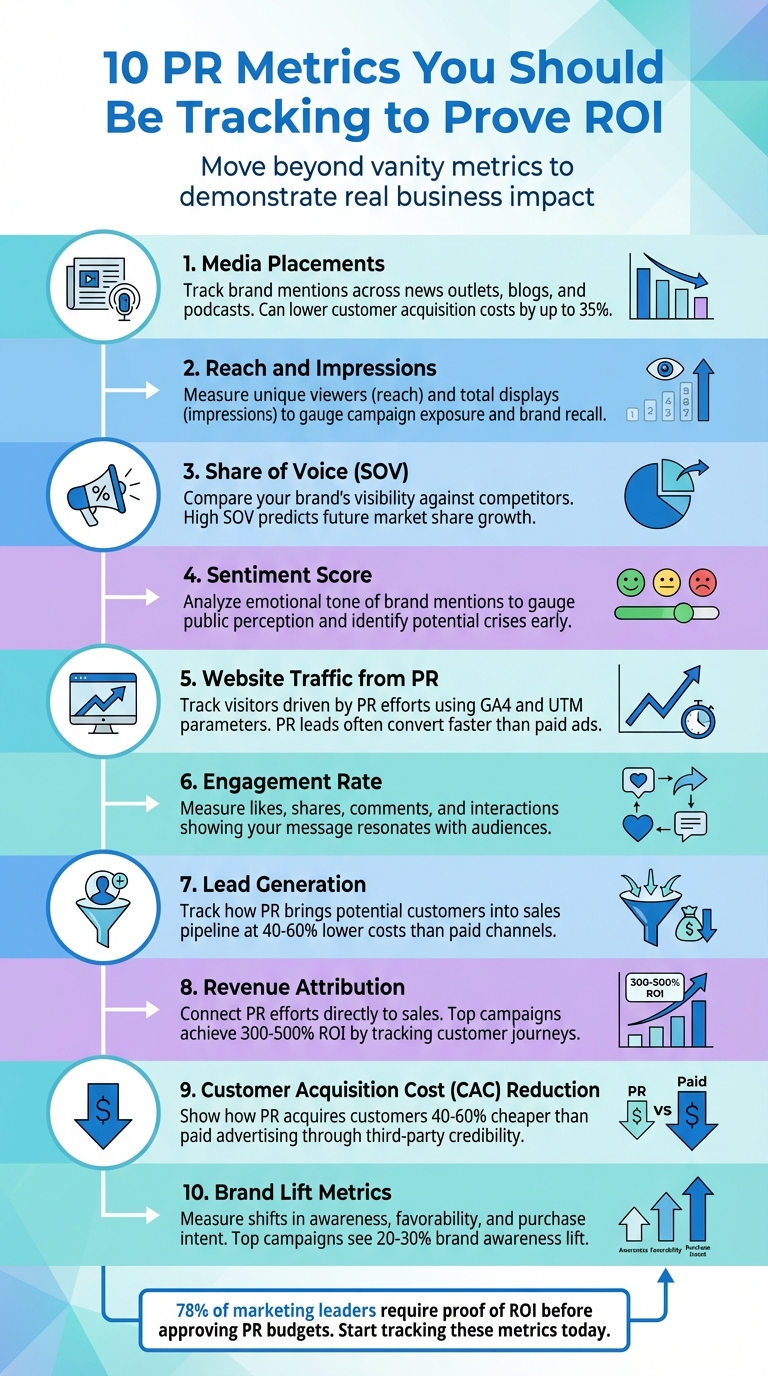
Campaign effectiveness centers on business outcomes rather than engagement metrics. An effective campaign isn't one that got lots of clicks — it's one that moved prospects closer to purchase, reduced acquisition costs, or increased customer lifetime value.
Your definition of effectiveness should include three layers:
- Revenue metrics that leadership cares about: pipeline contribution, customer acquisition cost, lifetime value changes, and return on marketing investment
- Behavioral signals showing audience progress: product trial starts, demo requests, or sales conversations initiated
- Attribution markers connecting campaign touchpoints to final conversions: first-touch, multi-touch, or time-decay models depending on your sales cycle
Without these definitions, you become vulnerable to confirmation bias. High engagement feels satisfying in the moment but carries little weight without corresponding business results.
Why Most Campaigns Fail at the Measurement Stage
Campaign Effectiveness Measurement: A Practical 2025 Guide - Why Most Campaigns Fail at the Measurement Stage.
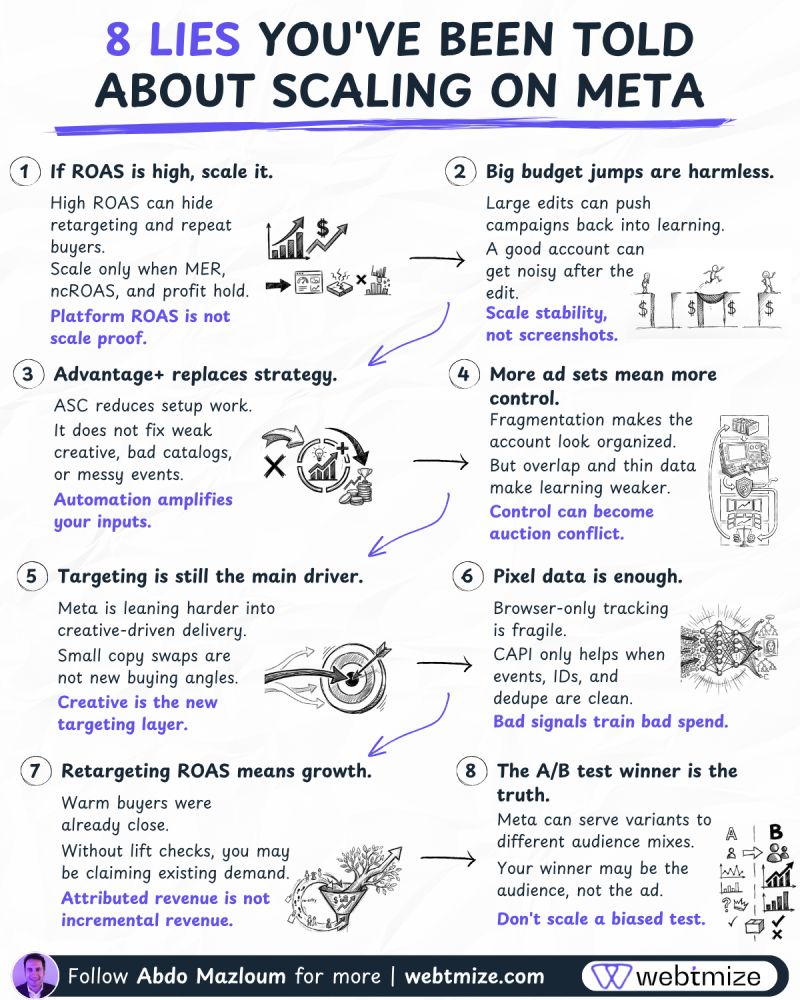
Most marketing campaigns fail at measurement, not execution. The creative might be brilliant, the targeting precise, and the timing perfect — yet you still can't prove it worked.
The reason is simple: success was defined after launch instead of before. Effective campaigns start with clear definitions. Before creating a single asset or writing a single line of copy, you need answers to three questions:
- What specific business outcome will this campaign influence?
- How will we measure that influence directly?
- What's the minimum return needed to justify our investment?
This clarity becomes your competitive advantage. By answering these questions first, you can build measurement frameworks that directly connect marketing activities to revenue outcomes, make data-informed decisions while campaigns are still running, and confidently report results in language leadership actually values.
Metrics That Matter — and the Pretenders to Avoid

Campaign Effectiveness Measurement: A Practical 2025 Guide - Metrics That Matter — and the Pretenders to Avoid.
Every marketing team drowns in data. Analytics dashboards show hundreds of numbers, promising insights but delivering confusion instead. A typical marketing platform tracks over 100 metrics, yet most teams regularly use fewer than 10.
Here's a common marketing truth: measuring everything means measuring nothing. Focus on metrics that connect directly to business results.
Business Impact Metrics
These turn marketing activities into financial results everyone understands:
- Customer Acquisition Cost (CAC): What you spend to acquire each new customer
- Customer Lifetime Value (CLV): What each customer is worth to your business long-term
- Return on Marketing Investment (ROMI): The money you make compared to what you spend
- Revenue Attribution: The portion of company sales directly connected to your marketing
These metrics speak your executive team's language. They turn marketing from a mysterious expense into a proven revenue driver.
Campaign Performance Metrics
These show how well your marketing tactics work:
- Conversion Rate: How many people take your desired action
- Cost Per Acquisition (CPA): What you pay for each conversion
- Marketing Qualified Leads (MQLs): People showing clear buying signals
- Channel Attribution: Which marketing channels drive which types of conversions
Use these to fine-tune execution and make smarter tactical decisions while keeping your eye on bigger business goals.
Audience Behavior Metrics
These reveal how people interact with your marketing:
- Session Duration: How long people spend with your content
- Pages Per Visit: How deeply they explore what you offer
- Return Visitor Rate: How often they come back for more
- Content Preferences: Which topics and formats resonate best
These metrics help you refine your content approach and target the right people. They provide context for why some campaigns outperform others.
Metrics to Treat With Skepticism
Some metrics look impressive but tell you nothing about actual business impact:
| Metric Type | Examples | Reality Check |
|---|---|---|
| Vanity Metrics | Raw impressions, page views, follower counts | Content potentially appeared somewhere — but did anyone notice or act? |
| Misleading Combined Metrics | Engagement rate, quality score, influence scores | Calculated differently across platforms, making true comparison impossible |
| False Connection Metrics | Time-on-page, social shares, open rates | Longer isn't always better without looking at conversions; opening doesn't mean engaging |
The most dangerous metrics aren't wrong — they're incomplete. They show activity without outcomes, effort without results, tactics without strategy.
How Channel Selection Changes Your Measurement Approach
Campaign Effectiveness Measurement: A Practical 2025 Guide - How Channel Selection Changes Your Measurement Approach.
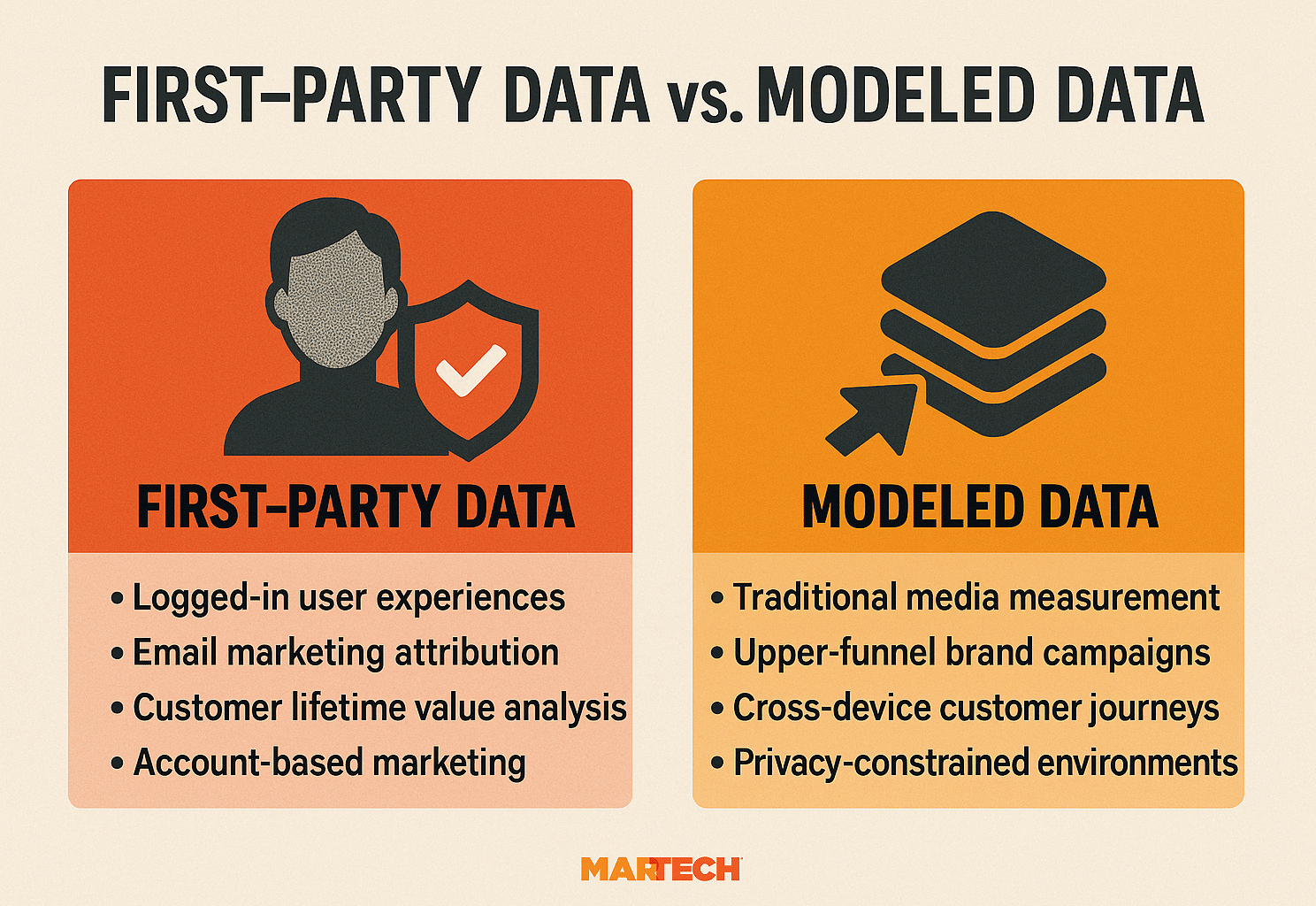
Different channels demand different measurement frameworks. Social campaigns require a distinct approach compared to email nurtures or search marketing.
Email campaigns typically show clearer attribution paths. Someone clicks your email, visits your site, and completes an action — clean and trackable from start to finish.
Social campaigns create awareness that might convert elsewhere weeks later. In this case, you'll need specialized attribution models to capture the delayed impact properly.
Content marketing builds authority gradually. Its impact appears in changing conversion rates across other channels rather than direct conversions.
Experienced marketers build channel-specific baselines. They understand that a two percent conversion rate means something completely different in email versus paid search. As a result, they adjust their measurement approach rather than compare raw numbers across channels.
Core Measurement Methodologies
Campaign effectiveness measurement has evolved significantly with the advertising ecosystem. Understanding the main approaches helps you choose the right tool for each situation.
Marketing Mix Modeling (MMM)
Marketing mix modeling analyzes historical data to quantify the impact of various marketing activities on sales. It works best for long-term strategic planning and budget allocation across channels. MMM typically uses aggregated data over extended periods, making it less useful for real-time optimization but excellent for understanding broad channel effectiveness.
Multi-Touch Attribution (MTA)
Multi-touch attribution tracks individual user journeys across touchpoints and assigns credit to each interaction. Unlike single-touch models that credit only the first or last click, MTA recognizes that customers often engage with multiple channels before converting. This approach works well for digital campaigns with rich user-level data.
Experiments and A/B Testing
Controlled experiments remain the gold standard for measuring causal impact. By randomly assigning audiences to treatment and control groups, you can isolate the true effect of a campaign element — whether that's a creative variation, a targeting change, or a channel allocation shift. Experiments provide the strongest evidence of what actually works.
Brand Trackers and Sentiment Analysis
For campaigns focused on awareness and perception, brand trackers measure shifts in awareness, attitudes, and purchase intent over time. Social listening tools and sentiment analysis complement these trackers by capturing real-time audience reactions and conversation themes.
Building a Campaign Measurement Framework
A practical measurement framework follows a clear sequence:
Step 1: Define Success Before Launch
Write down the specific business outcome, the metric that will measure it, and the minimum threshold for success. If you can't articulate these three elements, you're not ready to launch.
Step 2: Map Your Attribution Model
Choose an attribution approach that matches your sales cycle. Short e-commerce cycles might work with last-click attribution. Longer B2B cycles with multiple touchpoints need multi-touch or time-decay models.
Step 3: Connect Your Data Sources
Your email metrics live in one system, web analytics in another, and CRM data somewhere else. Fragmentation means you see isolated pieces instead of the complete customer journey. Connect your data sources to follow prospects across touchpoints.
Step 4: Set Attribution Windows That Match Reality
B2B purchases often take months, yet many campaigns only track 30-day attribution. Consequently, your campaign might deliver perfectly, but you'll never see the results. Set attribution windows that align with your actual customer journey, not arbitrary tracking periods.
Step 5: Simplify Your Dashboard
With dozens of possible metrics across multiple platforms, many marketers end up tracking what's easiest rather than what's meaningful. Simplify your metrics to focus only on what directly connects to business outcomes.
The Role of Web Analytics in Campaign Measurement
Web analytics sits at the center of campaign effectiveness measurement. Every campaign drives traffic somewhere — usually a landing page, a product page, or a signup flow. What happens after the click determines whether your campaign actually worked.
A website analytics platform like Data4 helps you track and analyze the traffic your campaigns generate. It positions itself as a simple, efficient alternative to Google Analytics, with a focus on ease of use and actionable insights rather than overwhelming complexity. For website owners, marketers, and analysts who need to understand visitor behavior, traffic sources, and engagement metrics without the learning curve of traditional analytics tools, this approach removes a significant barrier to effective measurement.
Key capabilities to look for in your analytics tool include real-time traffic tracking so you can monitor campaign performance as it happens, audience segmentation to understand which campaign audiences behave differently, and conversion analysis to connect traffic to outcomes. Customizable dashboards let you surface the metrics that matter for your specific campaign goals rather than drowning in default reports.
For teams running multiple campaigns across different regions, multi-language and multi-domain support becomes essential. Data4's availability in Chinese, English, and Japanese with domain-specific localization demonstrates how analytics tools can serve international campaign measurement needs without sacrificing clarity.
If you're evaluating your analytics stack, comparing options can help. See how Data4 stacks up against Fathom Analytics and Simple Analytics on privacy, ease of use, and traffic insights, or explore the Data4 vs Plausible vs Fathom comparison for a broader view of lightweight analytics alternatives.
Common Obstacles That Derail Accurate Measurement
Three problems consistently undermine campaign measurement:
Data fragmentation across platforms creates blind spots. Your email metrics live in one system, web analytics in another, and CRM data somewhere else. This fragmentation means you see isolated pieces instead of the complete customer journey.
Attribution windows that end too soon miss important conversions. B2B purchases often take months, yet many campaigns only track 30-day attribution. Consequently, your campaign might deliver perfectly, but you'll never see the results.
Measurement complexity overwhelms marketing teams. With dozens of possible metrics across multiple platforms, many marketers end up tracking what's easiest rather than what's meaningful.
The solution: build measurement frameworks that align with your actual customer journey, connect your data sources to follow prospects across touchpoints, and simplify your metrics to focus only on what directly connects to business outcomes.
Practical Example: Measuring a Multi-Channel Launch Campaign
Let's walk through a concrete example. Suppose you're launching a new SaaS feature and running a campaign across email, paid search, and LinkedIn.
Before launch, you define:
- Business outcome: 500 new trial signups within 60 days
- Primary metric: trial conversion rate by channel
- Minimum return: CAC below $80 per trial
During the campaign, you track:
- Email: open rate, click-through rate, landing page conversion rate
- Paid search: impression share, click-through rate, cost per click, conversion rate
- LinkedIn: engagement rate, click-through rate, assisted conversions
After the campaign, you analyze:
- Which channel produced the lowest CAC?
- Which channel assisted conversions that ultimately happened elsewhere?
- What was the overall ROMI?
This approach gives you actionable answers rather than a pile of disconnected metrics. You can reallocate spend to the highest-performing channels and justify budget decisions with revenue data, not engagement numbers.
Choosing the Right Measurement Tools
Your measurement stack should match your campaign complexity. For most teams, the essential components are:
- Web analytics for tracking campaign traffic, conversions, and user behavior
- CRM or marketing automation for lead tracking and pipeline attribution
- UTM parameters for consistent campaign tagging across channels
- Dashboard or reporting tool for consolidating metrics into a single view
For web analytics specifically, the right tool depends on your priorities. If you need deep customization and enterprise features, a platform like Google Analytics or Adobe Analytics might fit. If you want simplicity, speed, and actionable insights without the complexity, a lightweight alternative like Data4 offers a compelling path. For teams focused on product analytics rather than marketing analytics, tools like PostHog and its competitors serve a different use case worth understanding.
For a deeper dive into tracking campaign performance specifically, see this practical framework for tracking marketing campaign performance.
Related reading
- Behavioral Triggers: Types, Examples & How to Use Them - Learn what behavioral triggers are, the main types, real-world examples, and how to use them to improve engagement and conversions on your website.
- Data4 vs Fathom Analytics vs Simple Analytics Compared - Compare Data4, Fathom Analytics, and Simple Analytics on privacy, ease of use, traffic insights, and pricing to find the right website analytics tool.
- PostHog vs Competitors: Which Analytics Tool Wins in 2025? - Compare PostHog vs Amplitude, Mixpanel, and GA4 across features, pricing, and ease of use. Find the right product analytics tool for your team.
Sources and further reading
- How to measure the effectiveness of marketing campaigns - Your CEO doesn't care about impressions. She wants revenue impact. Here's how to measure marketing campaigns that prove their worth in dollars, not clicks.
- Measuring Marketing Campaign Effectiveness - Experian - Measuring marketing campaign effectiveness · Identify your marketing strategies to measure success · Identify your marketing channels · Allocate expenditures ...
- Campaign Effectiveness Measurement - A critical component of any advertising campaign is the ability to evaluate its success through specific metrics that need to be impacted (ex.,...
Frequently Asked Questions
What is campaign effectiveness measurement?
Campaign effectiveness measurement is the systematic evaluation of whether marketing campaigns achieved their intended business outcomes. It goes beyond engagement metrics like clicks and impressions to measure revenue impact, customer acquisition costs, and return on marketing investment.
What are the most important campaign effectiveness metrics?
The most important metrics fall into three categories: business impact metrics (CAC, CLV, ROMI, revenue attribution), campaign performance metrics (conversion rate, CPA, MQLs, channel attribution), and audience behavior metrics (session duration, pages per visit, return visitor rate).
What's the difference between KPIs, engagement metrics, and outcome metrics?
KPIs are the specific numbers tied to your campaign goals. Engagement metrics measure audience interaction (clicks, likes, shares) but don't necessarily indicate business impact. Outcome metrics measure actual business results — revenue generated, customers acquired, or pipeline created.
How do I choose an attribution model?
Choose an attribution model that matches your sales cycle. Short e-commerce cycles might work with last-click attribution. Longer B2B cycles with multiple touchpoints need multi-touch or time-decay models. The key is aligning your attribution window with how long your customers actually take to decide.
What's the difference between marketing mix modeling and multi-touch attribution?
Marketing mix modeling analyzes aggregated historical data to quantify channel impact over long periods, making it ideal for strategic budget planning. Multi-touch attribution tracks individual user journeys across digital touchpoints, making it better for real-time tactical optimization.
How do I avoid vanity metrics in campaign reporting?
Start by defining success before launch using business outcomes rather than engagement targets. Then filter every metric through one question: does this number connect to revenue, cost reduction, or customer value? If not, it's probably a vanity metric.
Can I measure campaign effectiveness without expensive enterprise tools?
Yes. A combination of web analytics, UTM parameters, and a CRM or spreadsheet can handle measurement for most small and mid-sized campaigns. The key is consistent tagging and disciplined tracking, not expensive software.
Conclusion
Campaign effectiveness measurement isn't about tracking more metrics — it's about tracking the right metrics and connecting them to business outcomes. Start by defining success before launch, choose attribution models that match your customer journey, and simplify your reporting to focus on what leadership actually cares about: revenue, cost, and return.
The teams that master this discipline don't just prove their worth — they earn the trust and budget to scale what works. In an environment where marketing budgets face constant scrutiny, that's the ultimate competitive advantage.
For more on the behavioral signals that indicate campaign progress, explore behavioral triggers and how to use them to improve engagement and conversions on your website.