
Amplitude Review 2026: Strengths, Limits, and Who It’s For
Amplitude has grown from a mobile analytics startup into a public company powering digital insights for over 1,000 enterprise customers and 23 of the Fortune 100. It promises product teams a single platform to understand user behavior, run experiments, and activate data—all with AI assistance. But does it deliver on that promise for teams of different sizes and skill levels? This review draws on verified user feedback from G2 and Gartner Peer Insights, community discussions, and the platform’s own capabilities to give you a clear, evidence-based picture.
What Is Amplitude Analytics?
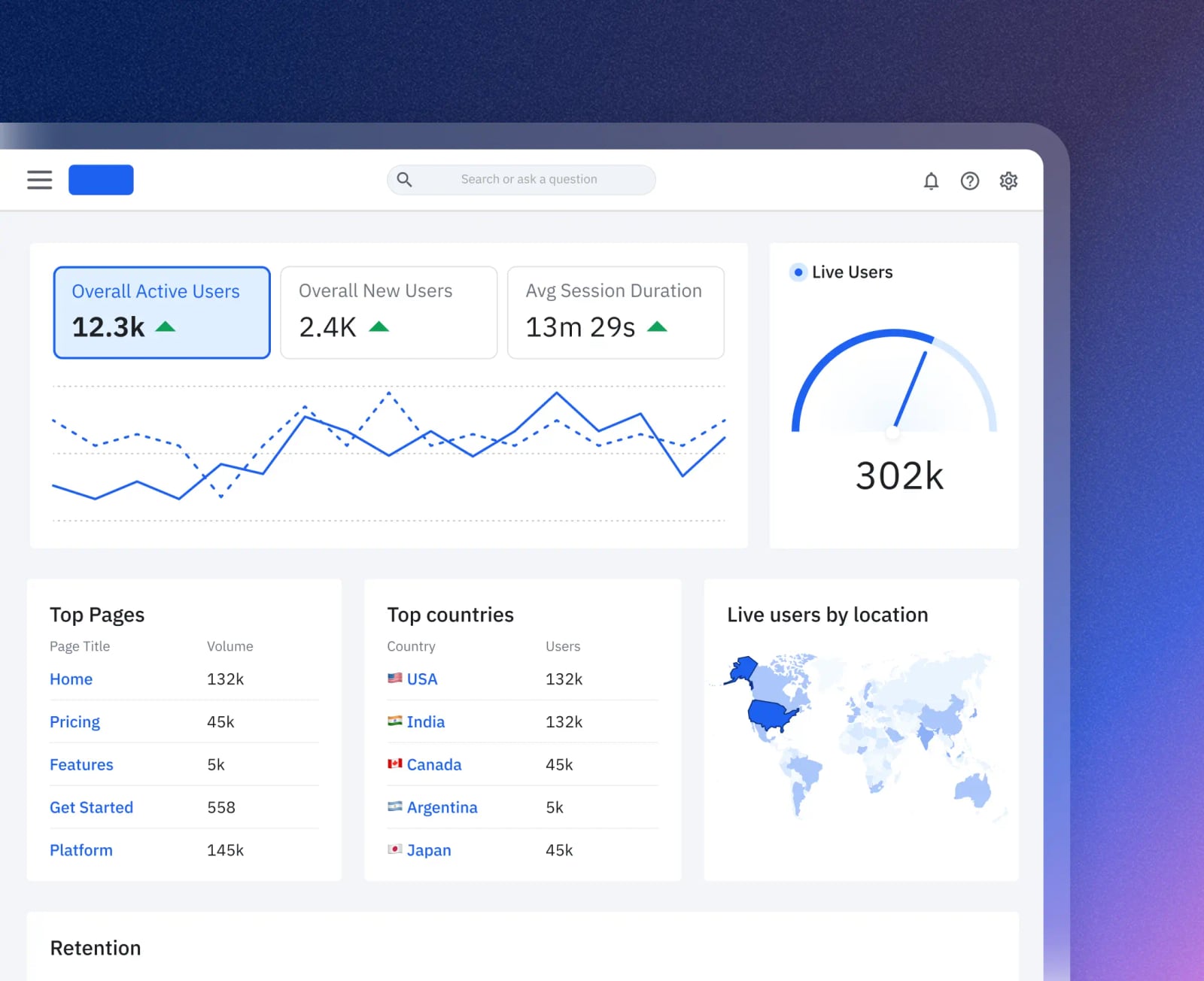
Amplitude product interface.
Amplitude is a digital analytics platform built for product teams—product managers, engineers, and data analysts—who need to move beyond page views and session counts. It tracks event-based user actions, letting you map entire customer journeys, measure retention, and pinpoint exactly where users drop off. Recent AI-powered workflows, including a natural language query interface and customizable agents, aim to make advanced analysis accessible without SQL.
Core capabilities include:
- Behavioral analytics: Event segmentation, user paths, and real-time dashboards.
- Cohort and retention analysis: Group users by behavior or attributes and track long-term engagement.
- Funnel and conversion analysis: Identify friction points in signup flows, checkout processes, or feature adoption.
- A/B testing and experimentation: Launch tests and measure impact without leaving the platform.
- Session replay: Watch anonymized user sessions to diagnose UX issues.
- Data activation: Sync audiences to tools like Slack, Jira, or GitHub via MCP connectors.
Who Is Amplitude For?
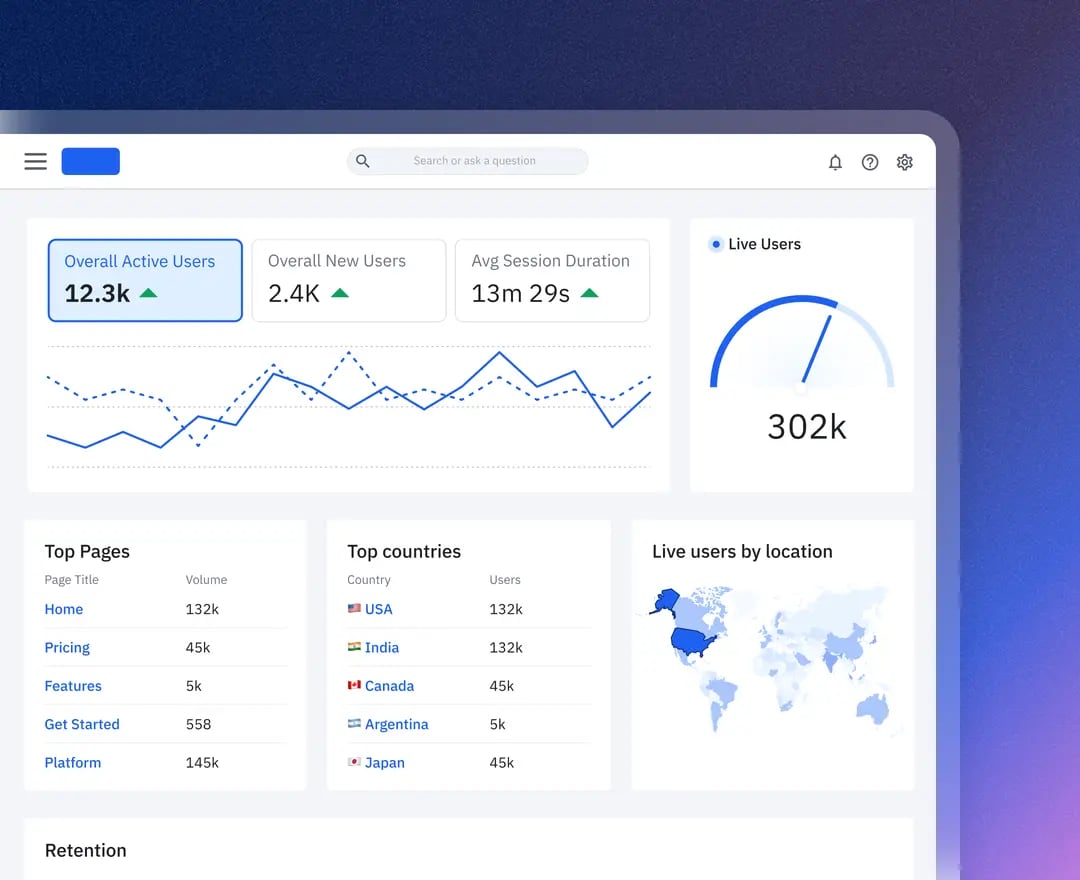
Amplitude product interface.
Amplitude is designed for product-led organizations where understanding in-app behavior directly influences roadmap decisions. Ideal users include:
- Mid-market and enterprise product teams that need to analyze complex, multi-step user journeys across web and mobile.
- Data-informed product managers who want to self-serve insights without waiting for a data engineering queue.
- Growth and experimentation teams running frequent A/B tests and needing integrated measurement.
- Companies scaling beyond basic analytics—if you’ve outgrown Google Analytics’ session-based model, Amplitude’s event-based architecture becomes valuable.
It’s less suited for small marketing websites focused purely on traffic and page-level metrics. For those use cases, simpler platforms like Data4 vs Heap vs Clicky or Statcounter may offer a better fit with lower overhead.
Key Strengths
Deep Behavioral Insights
Users consistently praise Amplitude’s ability to answer nuanced questions. One Gartner reviewer noted that real-time access to insights within the UI and 30-minute analysis in Redshift “delivers faster time to insights and decisions.” The platform excels at cohort-based retention analysis—its playbooks on retention and engagement are widely referenced as practical frameworks for product teams.
AI-Powered Accessibility
The introduction of the Global Agent and Custom Agents marks a significant shift. Instead of learning Amplitude’s charting syntax, you can ask questions in plain English—“show me the 7-day retention for users who completed onboarding last month”—and get a formatted chart. This lowers the barrier for non-analyst team members and speeds up ad-hoc exploration.
Strong Partnership and Support
Enterprise customers frequently highlight the vendor relationship. A VP of Data and Analytics at a media company shared on Gartner Peer Insights: “It feels like a partnership, they helped get us onboarded which included significant effort… We engage via Product CABs and have made suggestions that are then taken forth and added to the product roadmap.” This level of strategic engagement matters when analytics become mission-critical.
Comprehensive Integration Ecosystem
MCP connectors to Slack, Jira, and GitHub enable cross-tool actions—for example, triggering a Jira ticket when a funnel conversion drops below a threshold. This operationalizes analytics, turning insights into workflows rather than static reports.
Limitations and Challenges
Pricing Can Escalate Quickly
Multiple user reviews, including on Reddit, flag cost as a major concern. One user noted: “We used to be on a paid enterprise plan but due to our traffic volume was unaffordable, so we’re back on free.” Amplitude’s pricing is volume-based, and high event counts can push costs beyond what smaller teams or bootstrapped companies can justify. The free tier is generous for exploration but lacks advanced features like session replay and custom agents.
Steep Learning Curve for Full Value
While basic charts are accessible, mastering Amplitude’s deeper capabilities—custom formulas, derived properties, complex cohort definitions—requires dedicated learning. A design specialist at a large bank gave a critical Gartner review, calling the interface “overwhelming” and noting that “there are simply too many possibilities and this drives our team and our efforts to sort of unveil the software rather than actually getting value from it.” This isn’t a tool you plug in and instantly master.
Implementation Complexity
Setting up Amplitude correctly demands thoughtful event taxonomy planning. A Reddit user struggling with implementation asked for paid help after only getting page view data: “Im struggling with putting the codes into my website, I only ever get page view data and nothing else.” Without clean, well-structured event tracking, the platform’s power remains locked. Teams without dedicated data engineering support may find the initial setup daunting.
Interface Can Feel Cluttered
G2 and Gartner reviews occasionally mention UI complexity. The sheer breadth of features can overwhelm users who need straightforward dashboards. Competitors like Heap offer a more streamlined autocapture approach, while Mixpanel’s recent redesign emphasizes simplicity.
Amplitude vs. Alternatives: Quick Comparison
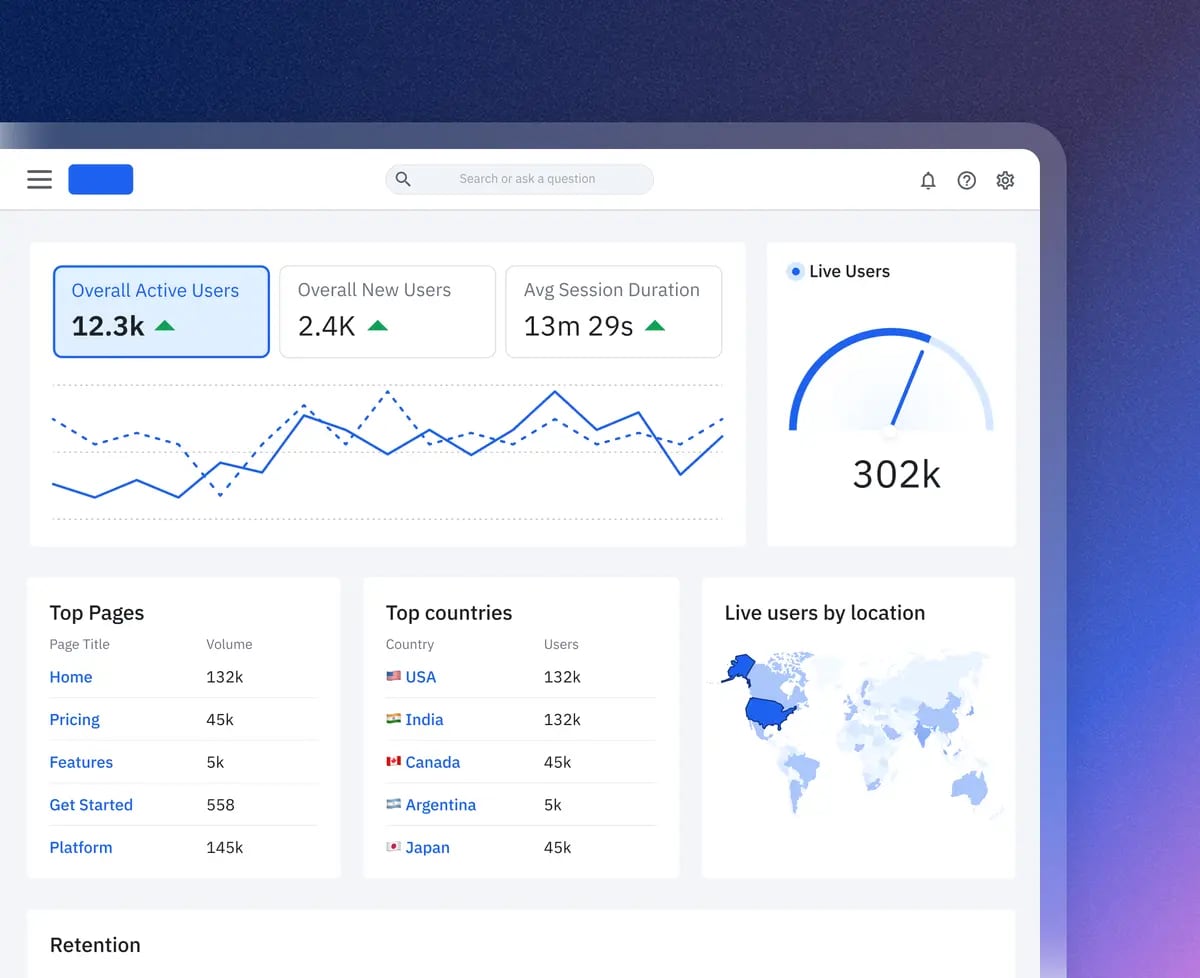
Amplitude product interface.
| Feature | Amplitude | Heap | Mixpanel |
|---|---|---|---|
| Tracking model | Event-based (requires planning) | Autocapture (retroactive) | Event-based |
| AI capabilities | Natural language querying, custom agents | Basic AI features | AI-driven insights |
| Learning curve | Moderate to steep | Moderate (easier retroactive analysis) | Moderate |
| Pricing signal | Volume-based; can get expensive | Similar volume concerns | Also flagged as costly at scale |
| Best for | Complex product analytics, experimentation | Teams wanting retroactive data without upfront tagging | Quick setup, intuitive reports |
Heap’s autocapture means you can define events after data collection—a lifesaver if you’re unsure what to track upfront. Mixpanel offers a more approachable interface for teams new to product analytics. Amplitude’s edge lies in depth: when you need sophisticated cohort analysis, integrated experimentation, and AI-driven workflows, it pulls ahead.
For teams evaluating privacy-first or simpler alternatives, our comparison of Data4 vs PostHog explores how developer-oriented platforms stack up against marketer-friendly tools.
Setup and Onboarding
Amplitude’s setup process reflects its enterprise DNA. You’ll need to:
- Instrument events via SDKs (JavaScript, iOS, Android, React Native, and server-side options) or integrations like Segment.
- Define a tracking plan—what events, properties, and user attributes matter to your product.
- Validate data using Amplitude’s debugging tools before trusting dashboards.
- Build dashboards and experiments tailored to your team’s workflows.
Enterprise customers often receive hands-on onboarding support, which reviewers describe as a genuine partnership. Self-serve teams rely on Amplitude’s documentation, playbooks, and community resources. Expect a multi-week ramp-up to full proficiency, especially if you’re retrofitting an existing product.
Pricing Signals
Amplitude doesn’t publish transparent pricing on its site, but patterns emerge from user feedback:
- Free plan: Includes core analytics, up to 10 million monthly events, and basic features. Suitable for early-stage startups and evaluation.
- Growth plan: Adds advanced analytics, custom dashboards, and some AI features. Pricing scales with event volume.
- Enterprise plan: Full feature set including session replay, experimentation, custom agents, and dedicated support. Contracts are negotiated; costs can reach tens of thousands annually for high-volume products.
If your event volume is unpredictable or growing fast, budget conservatively. Some teams intentionally reduce tracked events to control costs—a trade-off that can undermine the very insights you’re paying for.
Decision Criteria: Is Amplitude Right for You?
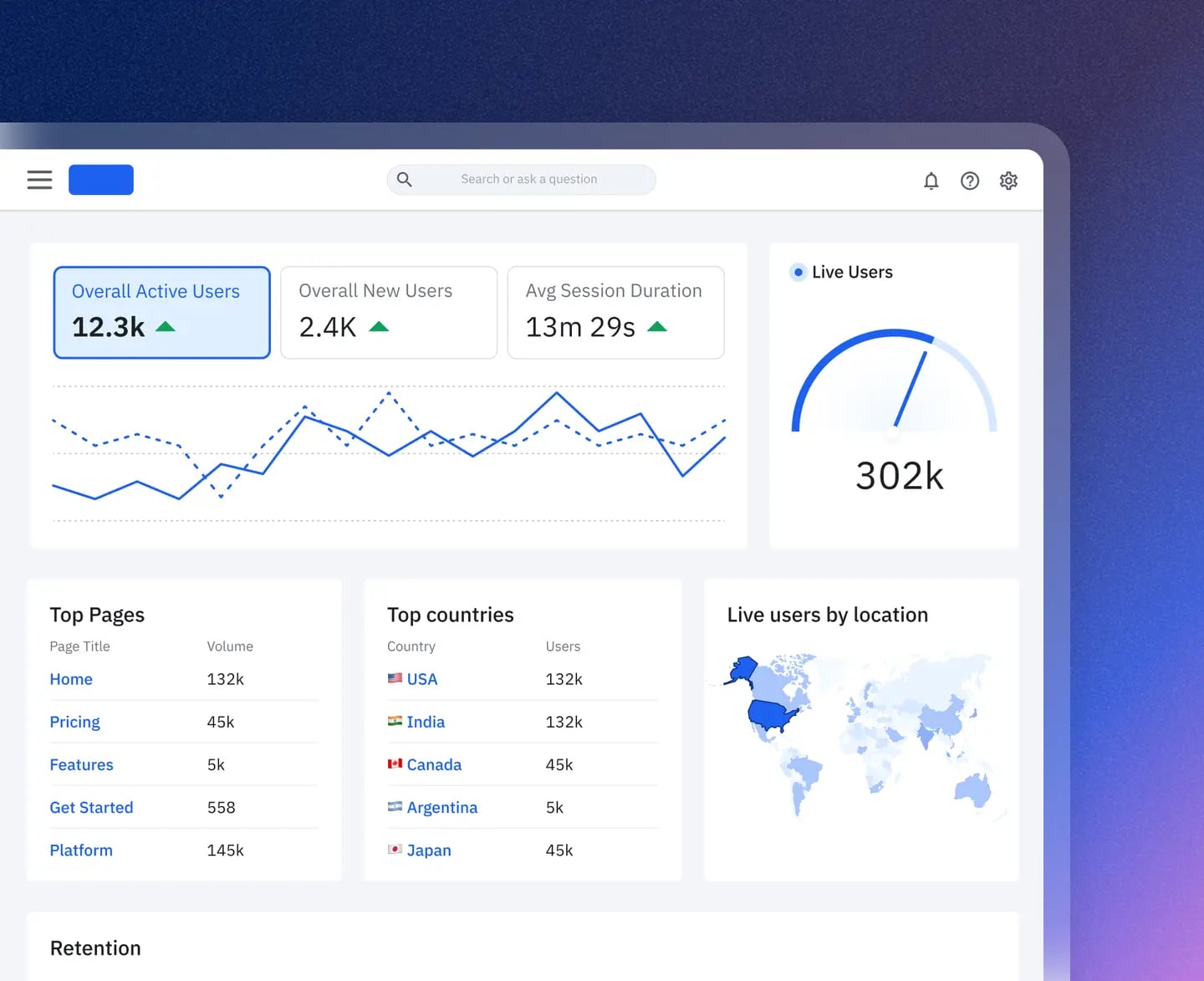
Amplitude product interface.
Choose Amplitude if:
- You need deep behavioral analytics—retention cohorts, multi-step funnels, and user path analysis.
- Your team is committed to data-informed product development and has (or can hire) analytics expertise.
- You value integrated experimentation and AI-assisted querying.
- You’re an enterprise or scaling mid-market company with the budget for a premium tool.
Look elsewhere if:
- You primarily need website traffic analytics—consider Top 10 Website Analytics Platforms 2026 for broader options.
- Budget is tight and event volume is high—Heap or Mixpanel may offer more predictable pricing at your scale.
- You need simplicity above all—autocapture tools like Heap reduce upfront planning, and lightweight privacy-first options exist for basic needs.
- Your team lacks the bandwidth for a thorough implementation; a tool that’s only partially instrumented delivers partial value.
Related reading
- HIPAA-Compliant Analytics Suite: How to Choose in 2026 - Compare HIPAA-compliant analytics suites from Piwik PRO to Freshpaint. Learn BAA essentials, PHI-safe tracking, and how platforms like Data4 fit into your privacy-first stack.
Sources and further reading
Anyone have experience with Amplitude for product analytics or any other similar platforms? I have some questions : r/ProductManagement - Disclaimer: I'm a cofounder of Amplitude
.
Amplitude Analytics Reviews 2026: Details, Pricing, & ... - Users consistently praise the ease of use and intuitive interface of Amplitude Analytics, which allows for quick setup and efficient data analysis.
Amplitude Analytics Reviews & Ratings 2026 | Gartner Peer Insights - Explore 337 in-depth Amplitude Analytics reviews and insights from real users verified by Gartner, and choose your business software with confidence.
Frequently Asked Questions
What is Amplitude used for?
Amplitude is used for product analytics—tracking how users interact with digital products, measuring retention and conversion, running A/B tests, and activating data across tools. It helps product teams make evidence-based decisions about features and user experience.
How does Amplitude differ from Google Analytics?
Google Analytics is session-based and built for marketing websites. Amplitude is event-based and built for product analytics—it tracks individual user actions, supports cohort and retention analysis, and connects behavior to business outcomes in ways GA4 cannot natively replicate.
Is Amplitude free?
Amplitude offers a free plan with core analytics and up to 10 million monthly events. Paid plans unlock advanced features like session replay, experimentation, and AI agents. Costs scale with event volume, so high-traffic products should evaluate carefully.
What are the main Amplitude alternatives?
Heap, Mixpanel, and Pendo are the most common alternatives. Heap offers retroactive autocapture, Mixpanel emphasizes ease of use, and Pendo combines analytics with in-app guidance. For developer-oriented teams, PostHog provides an open-source option.
Does Amplitude work for mobile apps?
Yes. Amplitude provides SDKs for iOS, Android, React Native, and cross-platform frameworks. It’s widely used by mobile-first companies to track in-app behavior, push notification engagement, and mobile retention.
Conclusion
Amplitude is a powerful, AI-enhanced product analytics platform that excels at answering complex behavioral questions—when it’s properly implemented and adequately funded. Its depth, integrated experimentation, and partnership-oriented enterprise support make it a strong choice for product-led organizations with the resources to invest in setup and ongoing optimization.
However, the learning curve, interface complexity, and volume-based pricing can be real barriers. Smaller teams or those with simpler analytics needs may find better alignment with alternatives that prioritize ease of use and predictable costs. As with any analytics investment, the tool’s value ultimately depends on your team’s ability to act on the insights it surfaces.