
Data4 vs Amplitude vs Mixpanel: Which Analytics Tool Fits Your Team?
Choosing between Data4, Amplitude, and Mixpanel is less about finding a single "best" tool and more about matching the right platform to the questions your team needs to answer. Data4 focuses on website traffic and marketing performance with a simplicity-first approach. Amplitude and Mixpanel, by contrast, are built for deep product and behavioral analytics inside web and mobile apps.
This guide breaks down how these three platforms differ across core use cases, feature depth, learning curve, and pricing so you can make a confident decision.
Understanding the Core Difference: Web Analytics vs Product Analytics
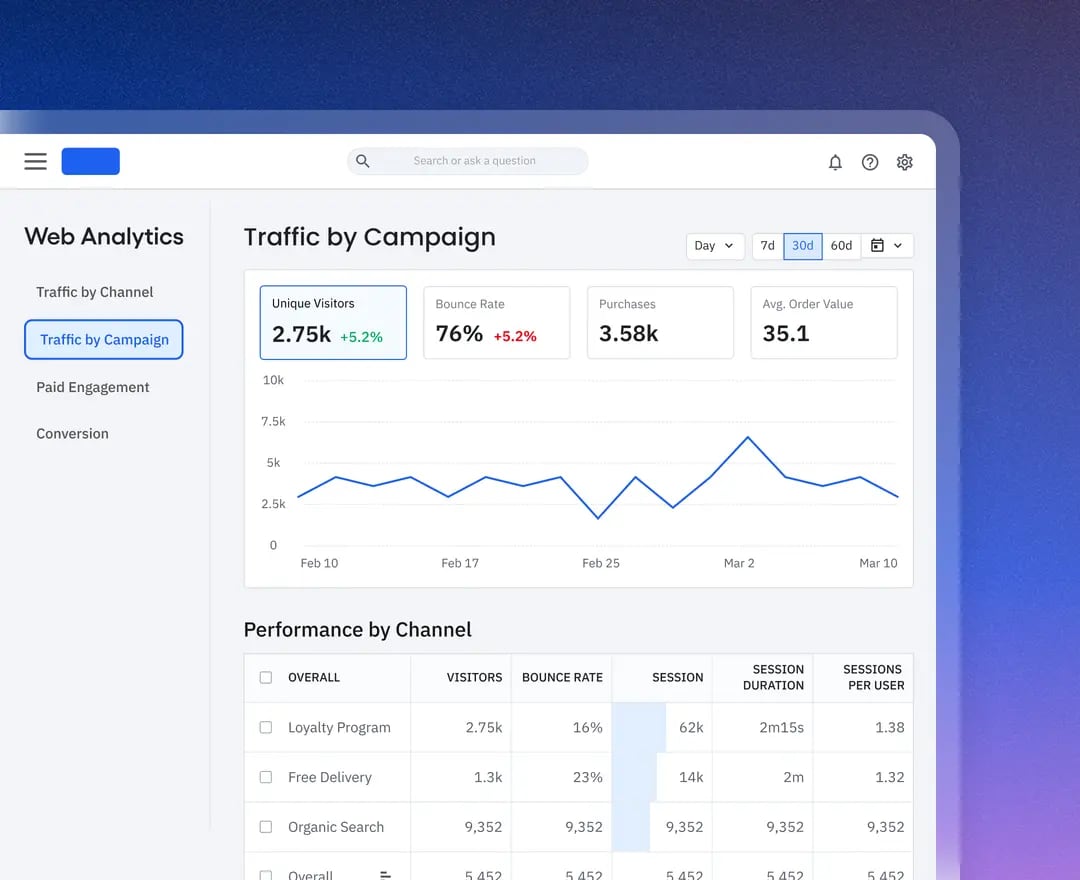
Amplitude product interface.
Before comparing features side by side, it helps to clarify what each category of tool is designed to do.
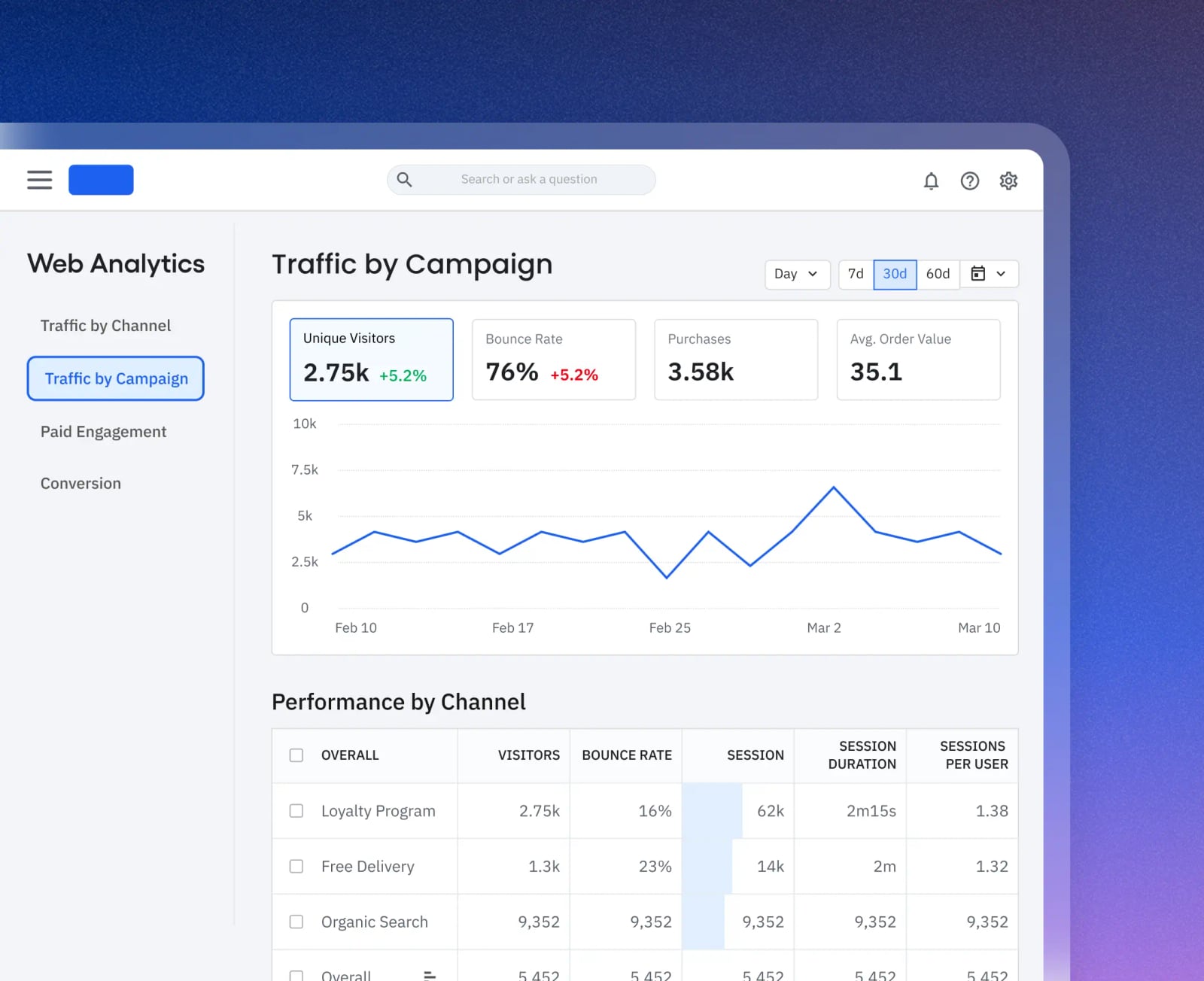
Web analytics answers questions like: Where does my traffic come from? Which campaigns drive conversions? What pages keep visitors engaged? Tools in this category track sessions, pageviews, traffic sources, and on-site conversions.
Product analytics answers a different set of questions: What do users do inside my app? Where do they drop off in a funnel? Which features drive retention? These tools track events, user properties, cohorts, and behavioral patterns over time.
Data4 sits firmly in the web analytics camp. Amplitude and Mixpanel are product analytics platforms that can also capture some web traffic data, but their strength lies in understanding in-product behavior. Many organizations run a hybrid stack—using a website analytics tool for marketing and a product analytics tool for the app experience—rather than forcing one platform to do both.
For a deeper look at how website analytics tools compare across privacy and ease of use, see our Simple Analytics vs Alternatives guide.
Data4: Simple, Global Website Analytics

Data4 vs Amplitude vs Mixpanel: Which Analytics Tool Fits? - Amplitude: Advanced Behavioral Analytics for Product Teams.
Data4 positions itself as a straightforward alternative to Google Analytics, built for website owners, marketers, and analysts who want clear traffic insights without the complexity of enterprise-grade tooling.
Where Data4 Excels
Ease of use and fast onboarding. Data4's core value proposition is simplicity. Teams can set up tracking, view real-time traffic, and access dashboards without wrestling with event taxonomies or complex implementation. For a marketing team that needs pageviews, traffic sources, and engagement metrics quickly, this is a genuine advantage.
Global and multilingual support. Data4 is available in multiple languages, including Chinese, English, and Japanese, with domain-specific localization. This makes it a practical choice for international businesses that need analytics accessible to regional teams in their native language.
Marketing-focused reporting. If your primary goal is monitoring website performance, optimizing campaigns, and understanding visitor behavior at the page level, Data4 covers those use cases directly. Real-time traffic tracking, audience segmentation, and conversion analysis are core features.
Where Data4 Has Limitations
Data4 is not designed for deep product analytics. If you need event-level behavioral analysis, cohort retention curves, feature adoption tracking, or in-app funnel optimization, you will hit the limits of a website analytics tool quickly. That is not a flaw—it simply reflects a different product category.
For teams comparing Data4 with other website analytics options, our Data4 vs Clicky vs PostHog comparison explores how it stacks up in real-time tracking and privacy features.
Amplitude: Advanced Behavioral Analytics for Product Teams
Amplitude product interface.
Amplitude is a comprehensive digital analytics platform aimed at product managers, engineers, and data analysts who need to understand user behavior in depth. It goes beyond basic tracking to offer AI-powered insights, experimentation, and data activation.
Where Amplitude Excels
Deep behavioral and cohort analysis. Amplitude shines at answering complex product questions: Which user segments retain best? What behaviors predict conversion? How does a feature release affect engagement? Its cohort, funnel, and retention tools are among the most mature in the category.
AI-powered workflows. Amplitude has invested heavily in AI features, including Global Agent and Custom Agents that allow natural language querying and cross-tool actions. Teams can ask questions in plain English and get insights without writing SQL or building complex reports manually.
Experimentation and session replay. Amplitude bundles A/B testing, session replay, and data activation capabilities, making it a broader product analytics suite rather than a single-purpose tracker. Integrations with tools like Slack, Jira, and GitHub via MCP connectors extend its reach into existing workflows.
Where Amplitude Has Trade-offs
Amplitude's power comes with a steeper learning curve and a more involved implementation. Setting up event tracking, defining properties, and maintaining a clean taxonomy requires planning and ongoing governance. For a small marketing team that only needs website traffic data, Amplitude is likely overkill—both in complexity and cost.
Mixpanel: Product Analytics with a Focus on Speed and Accessibility
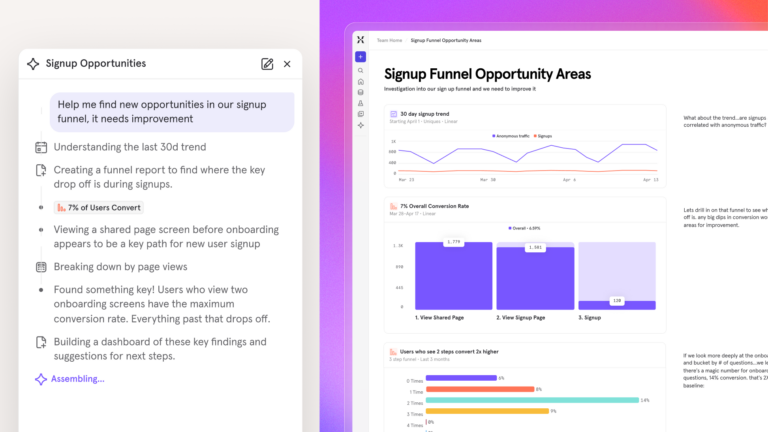
Data4 vs Amplitude vs Mixpanel: Which Analytics Tool Fits? - Mixpanel: Product Analytics with a Focus on Speed and Accessibility.
Mixpanel is an AI-powered digital analytics platform trusted by over 29,000 companies. It targets product, engineering, and growth teams with event tracking, funnel analysis, retention measurement, and experimentation features.
Where Mixpanel Excels
Fast, approachable product analytics. Mixpanel is often praised for its relatively gentle learning curve compared to enterprise alternatives. Teams can start tracking events and building funnels quickly, making it a popular choice for startups and mid-sized SaaS companies.
Proactive AI insights. Mixpanel surfaces insights proactively rather than requiring users to dig for them. Its AI features help identify trends, anomalies, and opportunities without manual report building.
Transparent, volume-based pricing. Mixpanel offers a free tier with up to 1 million monthly events, with paid plans starting at $0.28 per 1,000 events. This event-based pricing model makes costs predictable and scalable for teams that want to start small.
Data warehouse integration. Mixpanel connects with data warehouses via connectors to unify product and backend data, which is valuable for teams that want a single source of truth across product and operational metrics.
Where Mixpanel Has Trade-offs
Like Amplitude, Mixpanel is not a website traffic analytics tool. It tracks events inside your product, not marketing campaign performance or page-level visitor behavior. If your primary need is understanding where website visitors come from and which pages convert, Mixpanel will not replace a web analytics platform.
For a broader view of how Mixpanel and Amplitude compare against other product analytics tools, see our PostHog vs Competitors guide.
Side-by-Side Comparison
| Criteria | Data4 | Amplitude | Mixpanel |
|---|---|---|---|
| Primary category | Website analytics | Product analytics | Product analytics |
| Best for | Marketers, website owners | Product teams, data analysts | Product, growth, engineering teams |
| Core strength | Simple traffic and campaign reporting | Deep behavioral analysis, AI workflows | Fast setup, proactive insights |
| Learning curve | Low | High | Medium |
| Real-time traffic tracking | Yes | Limited | Limited |
| Funnel and retention analysis | Basic | Advanced | Advanced |
| A/B testing and experimentation | No | Yes | Yes |
| Session replay | No | Yes | Yes |
| Multilingual support | Yes (Chinese, English, Japanese) | Limited | Limited |
| Free tier | Varies | Available | Up to 1M events/month |
| Pricing model | Website plan | Usage-based | Event-based (from $0.28/1K events) |
How to Choose: Decision Framework
Choose Data4 if:
- Your primary need is website traffic, campaign performance, and page-level engagement.
- You want a simple Google Analytics alternative that your team can adopt quickly.
- You operate across multiple languages or regions and need localized analytics access.
- You do not need deep in-app behavioral analysis or experimentation.
Choose Amplitude if:
- You need advanced cohort, retention, and funnel analysis for a web or mobile app.
- Your team is comfortable with event-based tracking and data governance.
- You want AI-powered querying and cross-tool automation.
- Experimentation and session replay are part of your product workflow.
Choose Mixpanel if:
- You want product analytics with a faster time-to-value than enterprise platforms.
- Your team values proactive AI insights over manual report building.
- You prefer transparent, event-based pricing that scales with usage.
- You need to unify product data with a data warehouse.
Consider a Hybrid Approach
Many organizations use more than one tool. A common pattern is pairing a website analytics platform like Data4 with a product analytics tool like Mixpanel or Amplitude. The website tool answers marketing questions; the product tool answers behavioral questions. This avoids forcing either platform to do something it was not designed for.
If you are also evaluating privacy-focused alternatives, our GoatCounter alternatives guide covers lightweight options for simple traffic monitoring.
Practical Example: E-commerce vs SaaS
E-commerce marketing team. An online retailer wants to know which ad campaigns drive the most revenue, which landing pages convert best, and how visitors from different countries behave. Data4 covers these needs directly with traffic source reporting, conversion tracking, and multilingual dashboards. Amplitude or Mixpanel would require significant event instrumentation for the same marketing questions.
SaaS product team. A B2B software company wants to understand why trial users drop off between signup and activation, which features correlate with retention, and whether a new onboarding flow improves conversion. Amplitude or Mixpanel are the right tools here. Data4 cannot track in-app events, feature adoption, or cohort retention at the depth required.
Related reading
- Real-Time User Engagement: Strategies, Metrics & Tools - Learn what real-time user engagement is, why it matters, and how to measure and improve it with practical strategies, metrics, and analytics tools.
Sources and further reading
- 13 product and behavioral analytics tools to help you understand your users - Which product or behavioral analytics tool should you choose? We took a close look at 13 of the most popular and promising options.
- Web analytics solutions catalog 2026 - 8 platforms - Browse GA4, Piwik PRO, Matomo, Amplitude, Mixpanel, Adobe Analytics, PostHog and Plausible. Search, filter and read profiles.
- ChatGPT for Marketing Ops: 8 Ways to Scale and Strengthen - Marketing ops is where things either scale…
or quietly break.
Use ChatGPT to pressure-test and strengthen your systems:
Risk check Review this workflow for [campaign/project]. Identify single points of failure, risks if a team member is unavailable, and propose backup solutions.
Role clarity Build a RACI matrix for this marketing operation: [describe process]. Clearly define who is Responsible, Accountable, Consulted, and Informed at each stage.
Ops dashboard Design an ops dashboard structure that a CMO could skim weekly. Include KPIs, red-flag alerts, and forward-looking signals, not just lagging data.
Scale stress test Stress-test this process for scale: If workload doubled, where would it break? Recommend system or tool upgrades to prevent collapse.
Workflow clean-up Turn this messy Asana/Trello/Jira board export into a clean workflow with phases, dependencies, and measurable outputs.
QA system Draft an SOP for campaign QA that catches 90% of errors before launch. Include checks across creative, tracking, targeting, and approvals.
Redundancy plan Suggest a redundancy plan for our marketing stack. If [tool] goes down, what’s the fallback process so campaigns don’t stall?
AI delegation Analyze this ops structure and suggest how AI agents or automation could take over repetitive roles without losing accountability.
Smart marketers don’t just run campaigns. They build systems that hold up under pressure.
—
♻️ Found this useful? Make sure to repost.
By the way, if you want to go deeper with how you use ChatGPT, get my free guide ‘The 5 roles ChatGPT can play in your marketing team’ here: https://lnkd.in/gmpmtqnX
Frequently Asked Questions
Is Data4 a replacement for Amplitude or Mixpanel?
No. Data4 is a website analytics platform, while Amplitude and Mixpanel are product analytics platforms. They answer different questions. Data4 can replace Google Analytics for website traffic and campaign reporting, but it does not offer the event-level behavioral analysis, funnel optimization, or retention features that Amplitude and Mixpanel provide.
Can I use Data4 and Mixpanel together?
Yes. Many teams use a website analytics tool like Data4 alongside a product analytics tool like Mixpanel. Data4 handles traffic sources, page performance, and campaign attribution, while Mixpanel tracks in-app events, funnels, and retention. This hybrid approach gives you complete visibility across the marketing and product lifecycle.
Which tool is easiest to set up?
Data4 is the easiest to set up for website analytics because it requires no event taxonomy or product instrumentation. Between Amplitude and Mixpanel, Mixpanel is generally considered faster to get started with, thanks to its approachable interface and proactive insights. Amplitude offers more depth but requires more upfront planning.
How do Amplitude and Mixpanel pricing compare?
Mixpanel uses event-based pricing, with a free tier of up to 1 million monthly events and paid plans starting at $0.28 per 1,000 events. Amplitude uses usage-based pricing that varies by plan and feature set. Both offer free tiers, but costs scale differently depending on your event volume and required features.
Do Amplitude and Mixpanel track website traffic?
They can capture some web events, but they are not designed as website traffic analytics tools. They do not provide the same depth of traffic source reporting, page-level engagement metrics, or campaign attribution that a dedicated web analytics platform like Data4 offers.
Conclusion
Data4, Amplitude, and Mixpanel serve different needs, and the right choice depends on the questions your team is trying to answer. Data4 is the pragmatic choice for website traffic, campaign performance, and multilingual marketing analytics without complexity. Amplitude is the deep, AI-powered option for product teams that need advanced behavioral analysis and experimentation. Mixpanel sits between them on the product analytics side, offering fast setup, proactive insights, and transparent pricing.
If your focus is website performance and marketing optimization, start with Data4. If your focus is understanding and improving in-product user behavior, evaluate Amplitude and Mixpanel based on your team's analytical maturity, budget, and appetite for implementation effort. And if you need both, a hybrid stack is a proven, practical approach.