
Real-Time User Engagement: Strategies, Metrics, and Tools That Actually Work
Real-time user engagement is the practice of recognizing, responding to, and interacting with users at the exact moment they are active on your website, app, or another digital channel. Instead of waiting for a weekly report or a delayed email campaign, you act on live behavioral signals: a visitor lingering on a pricing page, a customer typing a question in chat, or a user abandoning a cart mid-checkout.
This matters because user expectations have shifted. People now assume that a brand knows who they are, remembers what they did, and responds in the moment. When that assumption fails, trust erodes quickly. When it succeeds, engagement, retention, and revenue tend to follow.
What Is Real-Time User Engagement?

Real-Time User Engagement: Strategies, Metrics & Tools - What Is Real-Time User Engagement?.
Real-time user engagement means interacting with users instantly across channels such as live chat, in-app messaging, social media, and personalized web experiences. It combines two things: live behavioral data and immediate action. The data tells you what a user is doing right now. The action is the response you trigger based on that data.
A simple example: a visitor spends three minutes comparing two product tiers. A real-time engagement system notices that behavior and surfaces a short message: “Need help choosing? Here’s a quick comparison.” That is fundamentally different from sending a generic email three days later.
According to Genesys, real-time engagement allows companies to provide timely, relevant responses and offers, creating more dynamic and personalized customer experiences. The key word is contextual: the response fits the immediate situation, not a broad segment.
Why Real-Time Engagement Matters
Real-Time User Engagement: Strategies, Metrics & Tools - Why Real-Time Engagement Matters.
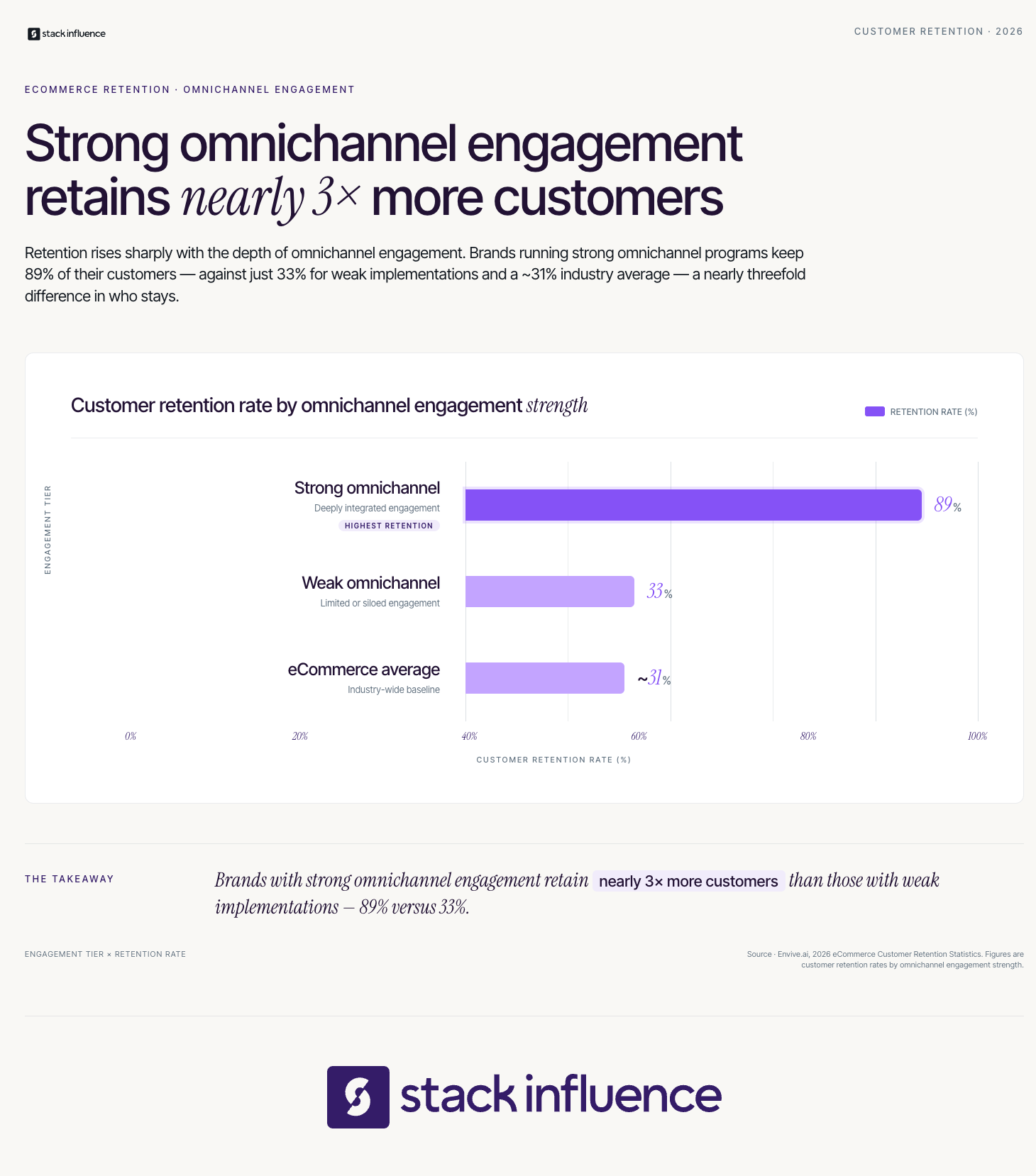
The business case is straightforward. Companies with strong omnichannel engagement strategies report an 89% boost in customer retention compared to those with weak strategies, and effective engagement can contribute up to two-thirds of a firm’s profit, according to research cited by ScreenMeet.
Beyond the headline numbers, real-time engagement delivers several practical benefits:
- Higher conversion rates: Live chat alone can increase conversions by 8–20%.
- Stronger retention: Users who feel heard and responded to are more likely to return.
- Reduced friction: Problems get solved in the moment, before they become support tickets or churn events.
- Competitive differentiation: Most brands still respond slowly. Speed becomes a visible advantage.
Core Metrics for Measuring Real-Time Engagement

Real-Time User Engagement: Strategies, Metrics & Tools - Core Metrics for Measuring Real-Time Engagement.
You cannot improve what you cannot see. Real-time engagement requires real-time visibility into user behavior. These are the metrics that matter most:
Active Users Right Now
How many people are currently on your site or app, and where are they? This is the baseline. A real-time dashboard should show live visitor counts, active pages, and geographic distribution without requiring a manual refresh.
Engagement Rate and Session Depth
Engagement rate measures the percentage of sessions that involve meaningful interaction: scrolling, clicking, watching a video, or spending more than a few seconds on a page. Session depth adds context by showing how many pages a user visits and how long they stay.
Real-Time Event Tracking
Events are the specific actions users take: button clicks, form submissions, video plays, downloads, chat messages. Tracking these as they happen lets you trigger responses immediately. For example, a user who clicks “pricing” three times in one session is signaling high intent.
Conversion Events and Drop-Off Points
Live conversion tracking shows you where users are converting and where they are leaving. If you see a sudden spike in cart abandonment, you can investigate and respond before the day ends—not after the monthly report.
Response Time
For chat and messaging channels, response time is an engagement metric in itself. A fast response keeps the conversation alive. A slow one ends it.
Tools like Data4 provide real-time traffic tracking and customizable dashboards, making it easier to monitor these metrics without the complexity of traditional analytics platforms. For a deeper look at the technical side, see Real-Time Performance Monitoring: A Practical 2025 Guide.
6 Real-Time Engagement Strategies That Work
Real-Time User Engagement: Strategies, Metrics & Tools - 6 Real-Time Engagement Strategies That Work.
1. Live Chat with Context
Live chat is one of the most direct forms of real-time engagement. Research shows that 63% of consumers are more likely to return to a website with live chat. But the difference between good and great chat is context. A chat window that says “How can I help?” to every visitor is generic. A chat window that says “I noticed you’re comparing the Pro and Business plans—want a quick breakdown?” is useful.
2. Behavioral Triggers and Automated Responses
Not every real-time response requires a human. Behavioral triggers let you automate context-aware messages based on user actions. Examples include:
- A welcome message for first-time visitors
- A discount prompt when a user lingers on a product page
- A help offer when a user repeatedly clicks a broken or confusing element
- A re-engagement nudge when a user is inactive for several minutes
To design these effectively, you need a clear understanding of behavioral triggers: types, examples, and how to use them.
3. Real-Time Personalization
Personalization means showing users content, offers, or recommendations that match their current behavior and past history. This could be as simple as displaying recently viewed items or as advanced as dynamically adjusting the homepage based on referral source and browsing history.
The key principle comes from SAS: real-time engagement requires knowledge of past purchases, stated preferences, and real-time situational context. Miss any of those three, and you risk delivering irrelevant messages that hurt trust.
4. Live Streaming and Interactive Video
Live video creates a sense of immediacy that pre-recorded content cannot match. Viewers of live video are 67% more likely to purchase a product or service, and live streaming can increase organic traffic by 157%. Use it for product launches, Q&A sessions, behind-the-scenes tours, or tutorials where viewers can ask questions in real time.
5. Active Social Media Engagement
Social media is not just a publishing channel. It is a real-time conversation platform. Responding to comments, answering questions, and participating in discussions while they are happening makes users feel valued. Automated instant replies on messaging platforms can acknowledge inquiries immediately, even when a human response follows later.
6. Digital Communities and Events
Communities give users a place to interact with each other and with your brand in real time. Sephora’s Beauty Insider community, with nearly 1.5 million members, is a well-known example. Live events—whether virtual or in person—create shared moments that strengthen emotional connection. Customers who feel emotionally connected to a brand spend two times more than those who do not.
How to Choose the Right Real-Time Engagement Tools
Real-time engagement spans multiple tools: chat software, marketing automation, social media management, and analytics. The analytics layer is often the most overlooked—but it is the foundation. Without real-time visibility into user behavior, every other tool is operating blind.
When evaluating analytics tools for real-time engagement, consider these criteria:
| Criterion | Why It Matters |
|---|---|
| Live traffic view | Shows active users and current pages without delay |
| Event tracking | Captures specific actions that trigger engagement responses |
| Custom dashboards | Lets you focus on the metrics that matter for your goals |
| Ease of use | Reduces the time between data collection and action |
| Multi-site support | Works across domains and regions for global teams |
| Privacy compliance | Protects user trust while collecting behavioral data |
Data4 positions itself as a straightforward alternative to Google Analytics, with real-time traffic tracking, audience segmentation, and customizable dashboards. For teams comparing privacy-focused options, see Data4 vs Plausible vs Fathom Analytics or Data4 vs Fathom Analytics vs Simple Analytics.
Common Mistakes to Avoid
Responding Without Context
The telecom example from SAS illustrates this perfectly. A customer nearing their data limit received a generic message directing them to a generic upgrade page. The company had the data to personalize the message but did not use it. The result was decreased satisfaction, not increased loyalty. Real-time engagement without context is just faster noise.
Treating All Channels the Same
A chat message, a social comment, and an in-app notification are different formats with different expectations. Copying the same message across all channels feels robotic. Tailor the format and tone to the channel.
Ignoring the Analytics Layer
Many teams invest in chat and personalization tools but skip real-time analytics. The result: they respond quickly but blindly. Real-time engagement requires real-time measurement. Without it, you cannot tell which responses are working.
Over-Automating
Automation is powerful, but over-automation feels hollow. A user who asks a specific question and receives a generic automated reply will notice. Use automation for acknowledgment and routing; use humans for genuine conversation.
Real-Time Engagement and Campaign Performance
Real-time engagement does not exist in a silo. It directly affects campaign effectiveness. When you respond to users in the moment, you capture intent while it is hot. This improves conversion rates, reduces wasted ad spend, and provides immediate feedback on campaign performance.
For a practical framework on measuring that impact, see How to Track Marketing Campaign Performance in 2025. If your campaigns drive e-commerce traffic, real-time engagement is especially valuable for reducing cart abandonment—explore E-commerce Conversion Tracking: A Complete 2025 Guide for the full picture.
Related reading
- Campaign Effectiveness Measurement: A Practical 2025 Guide - Learn how to measure campaign effectiveness with revenue-focused metrics, attribution models, and practical frameworks that prove marketing ROI.
- PostHog vs Competitors: Which Analytics Tool Wins in 2025? - Compare PostHog vs Amplitude, Mixpanel, and GA4 across features, pricing, and ease of use. Find the right product analytics tool for your team.
FAQ
What is the difference between real-time engagement and regular engagement?
Regular engagement often happens on a delay: scheduled emails, weekly reports, batch personalization. Real-time engagement responds to user behavior as it happens, using live data and immediate triggers.
Do I need a dedicated real-time analytics tool?
If you want to act on live behavior, yes. Traditional analytics tools that update hourly or daily cannot support real-time responses. A tool with live traffic views and event tracking is essential.
What is a good real-time engagement rate?
There is no universal benchmark because it depends on your industry, traffic source, and content type. Start by measuring your own baseline, then test changes and compare. The goal is improvement over time, not a fixed number.
Can small businesses implement real-time engagement?
Absolutely. Start with the basics: a live chat widget, real-time analytics, and one or two behavioral triggers. You do not need enterprise software to respond to users faster than your competitors do.
How does real-time engagement affect SEO?
Indirectly but meaningfully. Better engagement reduces bounce rates, increases time on page, and improves user satisfaction signals. These factors correlate with stronger organic performance over time.
Conclusion
Real-time user engagement is not a single tool or tactic. It is a mindset: see what users are doing now, understand what they need, and respond in the moment. The companies that do this well combine live analytics, contextual messaging, and human responsiveness into a seamless experience.
Start by measuring what is happening on your site right now. Add one real-time channel—live chat is usually the highest-impact starting point. Then layer in behavioral triggers and personalization as you learn what works. The tools are available; the advantage goes to teams that act on live data instead of waiting for the next report.