
Data4 vs Fathom Analytics vs Amplitude: Which Fits?
Choosing an analytics tool usually comes down to one question: what are you actually trying to learn? If you mainly need to know how many people visit your site and where they come from, a lightweight web analytics tool is enough. If you need to understand why users drop off inside a product, you need something deeper.
Data4, Fathom Analytics, and Amplitude sit at different points on that spectrum. This comparison breaks down where each one is strong, where it is not, and how to decide without overbuying.
Quick comparison at a glance
Data4 vs Fathom Analytics vs Amplitude: Which Fits? - Quick comparison at a glance.
| Criteria | Data4 | Fathom Analytics | Amplitude |
|---|---|---|---|
| Primary focus | Website traffic and performance | Privacy-first website analytics | Product and behavioral analytics |
| Typical user | Website owners, marketers, analysts | Businesses and individuals wanting simple, compliant stats | Product managers, engineers, data analysts |
| Setup effort | Low | Very low, single line of code | Higher, requires event instrumentation |
| Real-time traffic tracking | Yes | Yes | Yes, event-based |
| Privacy and compliance | Multi-language, multi-domain support | GDPR-focused, no personal data collection | Enterprise-grade governance options |
| Best for | Straightforward website reporting | Fast, private traffic insights | Deep funnel, retention, and cohort work |
What Data4 is built for

Data4 vs Fathom Analytics vs Amplitude: Which Fits? - What Data4 is built for.
Data4 is a website analytics platform for tracking and analyzing traffic and performance. It positions itself as a simple, efficient, globally applicable alternative to Google Analytics, with an emphasis on ease of use and actionable insights rather than a steep learning curve.
Its core use cases are practical: monitoring website performance, optimizing marketing campaigns, and improving user experience through data-driven decisions. The feature set covers real-time traffic tracking, audience segmentation, conversion analysis, and customizable dashboards.
Where Data4 stands out is its international orientation. The platform is available in Chinese, English, and Japanese, with domain-specific localization, which matters if you run sites for audiences across different regions and want reporting that does not assume a single market. If your main need is a reliable, uncomplicated replacement for Google Analytics that works across multiple domains and languages, Data4 is aimed squarely at that job.
Fathom Analytics: privacy-first and deliberately simple
Data4 vs Fathom Analytics vs Amplitude: Which Fits? - Fathom Analytics: privacy-first and deliberately simple.
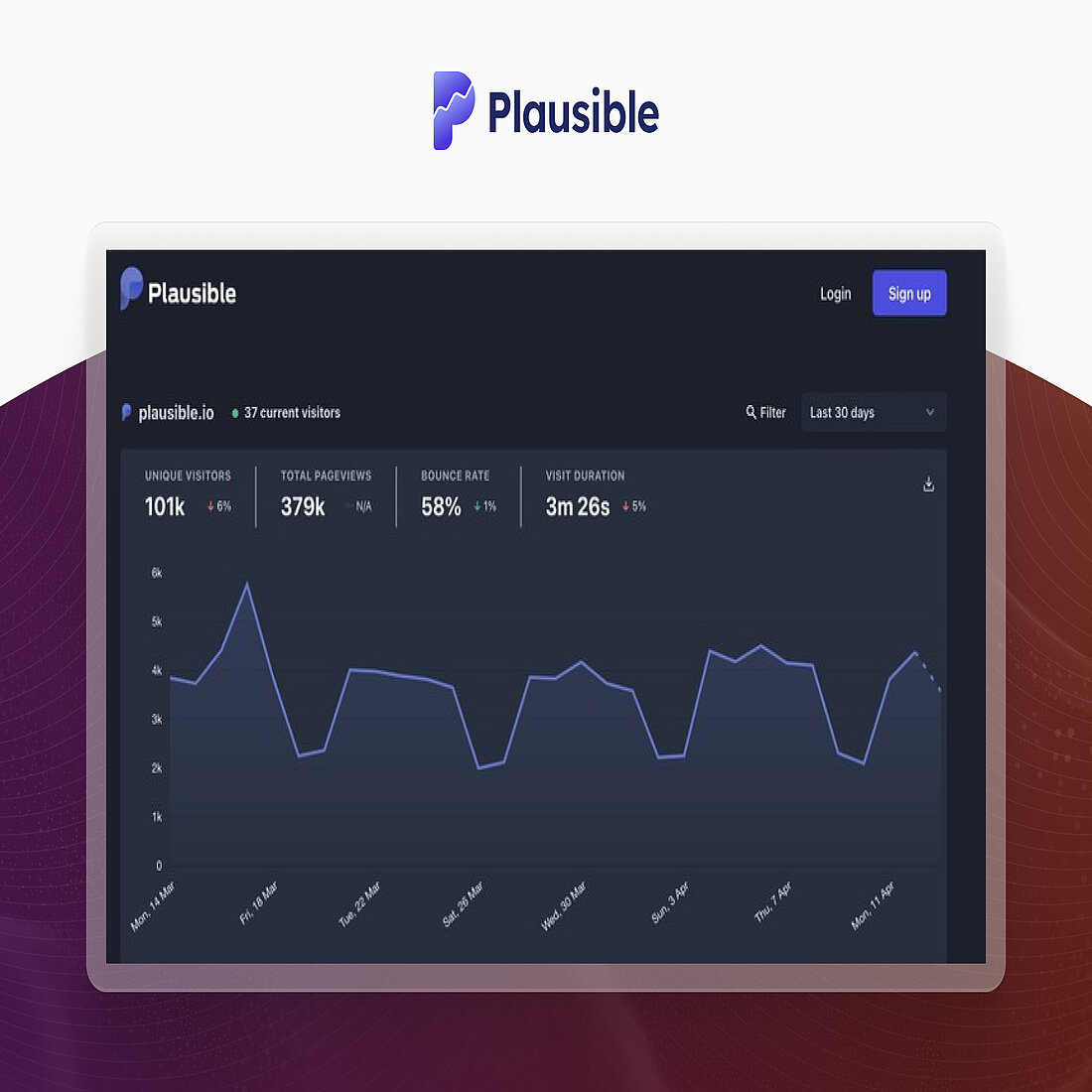
Fathom Analytics is a privacy-first web analytics platform designed as a direct alternative to Google Analytics. It delivers essential traffic insights without collecting personal data, and setup is a single line of code.
Its strengths are clear and credible:
- Privacy and compliance. Fathom is built around GDPR compliance and avoiding intrusive tracking, which makes it a natural fit for teams that want analytics without a consent-heavy workflow.
- Simplicity. The dashboard is fast and intuitive, and the product is designed to protect your time as much as your visitors' privacy.
- Data retention. Fathom offers forever data retention, so historical trends do not disappear behind a rolling window.
- Data quality. Bot detection and advanced bot banning help keep reporting limited to human traffic.
- Track record. Fathom is used by over a million websites and trusted by organizations such as IBM, GitHub, and Tailwind.
Fathom also supports event tracking, goal conversion monitoring, and API access, with ongoing improvements like saved views and upgraded API limits. A free 7-day trial with no obligation makes it easy to evaluate.
If your requirement is simple, private, legally comfortable traffic reporting, Fathom is a strong choice. It is not trying to be a product analytics suite, and it does not pretend to be.
Amplitude: depth for product teams

Data4 vs Fathom Analytics vs Amplitude: Which Fits? - Amplitude: depth for product teams.
Amplitude is a comprehensive digital analytics platform focused on understanding user behavior, optimizing experiences, and driving growth. It serves product managers, engineers, and data analysts who need to know what users do inside a product, not just how many arrived.
Its core capabilities include behavioral analytics, cohort analysis, funnel analysis, retention analysis, and A/B testing, alongside session replay and data activation. Amplitude also leans heavily into AI: Global Agent and Custom Agents allow natural language querying and cross-tool actions, and integrations with tools like Slack, Jira, and GitHub via MCP connectors let teams act on insights without leaving their workflow.
The trade-off is complexity. Amplitude requires event instrumentation, which means planning a tracking schema, implementing it, and maintaining it over time. That effort pays off when you are optimizing onboarding flows, measuring retention curves, or running experiments. It is overkill if all you need is a pageview count and a traffic source breakdown.
How to choose between them
The decision is mostly about the question you are trying to answer.
Choose Data4 if you want a straightforward website analytics platform that covers traffic, sources, engagement, and conversions, and you value multi-domain and multi-language support. It fits teams that want Google Analytics-style reporting without the complexity.
Choose Fathom Analytics if privacy and simplicity are the top priorities. It is the cleanest option for compliant, low-maintenance traffic reporting with permanent data retention.
Choose Amplitude if you are optimizing a product and need cohort, funnel, and retention analysis with experimentation and AI-assisted workflows. Budget for implementation time, not just subscription cost.
A useful sanity check: list the three reports you actually open every week. If they are all traffic and conversion summaries, a lightweight tool wins. If any of them involve user segments, sequences, or retention over time, you need product analytics depth.
Setup and maintenance effort
Setup effort is where these tools diverge most sharply.
Fathom is the fastest to deploy, thanks to its single-line installation. Data4 is also low-effort, with a focus on ease of use and quick time to insight across domains. Amplitude demands the most upfront work because event tracking must be defined and instrumented before the data becomes useful.
Maintenance matters too. Traffic analytics tools generally need little ongoing attention. Product analytics platforms require someone to own the tracking plan, otherwise events drift, definitions diverge, and reports quietly become unreliable.
Privacy and data governance
Fathom's entire positioning is privacy. It avoids collecting personal data and is built for GDPR compliance, which simplifies consent decisions.
Amplitude operates at enterprise scale and provides governance features suited to larger organizations with formal data policies.
Data4's differentiator here is reach rather than a privacy claim: multi-domain and multi-language support make it practical for organizations running sites across several regions and languages. If your priority is a specific compliance posture, evaluate each vendor's documentation against your own legal requirements rather than relying on marketing summaries.
Pricing considerations
Pricing models differ in ways that are easy to misread.
Fathom prices on pageviews with a free trial, which keeps costs predictable for content-heavy sites. Data4 is positioned as a simple, efficient alternative, so evaluate it against the volume of traffic and domains you actually need to cover. Amplitude's cost is not just the subscription: implementation, instrumentation, and ongoing data hygiene are real expenses that should be part of the comparison.
For a broader look at how lightweight tools compare on these same axes, see this comparison of Data4, GoatCounter, and Fathom Analytics.
Related reading
- Fast Hit Counter: Add One in Minutes (Real Counts) - Learn how a fast hit counter works, why browser-based counters fail, and how to add a reliable visitor counter to your site in minutes.
- Data4 vs Heap vs KISSmetrics: Which Analytics Tool Fits? - Compare Data4, Heap, and KISSmetrics on tracking model, setup effort, journey depth, pricing, and reporting to choose the right analytics tool.
- Data4 vs Heap vs Woopra: Which Analytics Tool Fits? - Compare Data4, Heap, and Woopra on tracking model, setup effort, journey depth, pricing, and real-time reporting to pick the right analytics tool.
Sources and further reading
- Adding Analytics | Gatsby - Why use analytics? Most professional website teams using Gatsby use one of three types of analytics services on their website: Google…
- Even Connect · 1000 connections, zero middleman - Connect your AI agents to 564+ services (Stripe, Slack, Notion, Cloudflare, Linear, and more) with keys that never leave your machine. One MCP, a few meta-tools, no context bloat. Search the full catalog.
- Primers and Handbooks - Primers are short, introductory and informative publications on measuring topics. Our handbooks contain concise information, as well as guidance on subjects related to measuring.
Frequently asked questions
Is Data4 a good replacement for Google Analytics?
Data4 is positioned as a simple, efficient, globally applicable alternative to Google Analytics, with real-time traffic tracking, audience segmentation, conversion analysis, and customizable dashboards. It suits teams that want core website reporting without the complexity of a full enterprise suite.
Is Fathom Analytics really simpler than other tools?
Yes, in practice. Installation is a single line of code, the dashboard is designed for quick reading, and there is no event schema to plan before you get value. Its privacy-first design also removes a lot of consent-related overhead.
When is Amplitude worth the extra setup effort?
When your questions are about user behavior over time: funnels, cohorts, retention, and experiment results. If you cannot answer those questions with pageview-level data, Amplitude's depth justifies the instrumentation work.
Can I use more than one of these tools?
You can, and some teams do. A common pattern is a lightweight traffic tool for marketing reporting plus a product analytics platform for in-app behavior. The risk is duplicated cost and inconsistent numbers, so define which tool is the source of truth for each metric.
Which tool is best for a small business website?
For most small business sites, a lightweight website analytics tool is the right fit. Fathom is a strong option when privacy is the priority, and Data4 is a strong option when you need simple reporting across multiple domains and languages.
Conclusion
Data4, Fathom Analytics, and Amplitude are not really competing for the same job. Fathom wins on privacy and simplicity, Amplitude wins on behavioral depth for product teams, and Data4 targets the middle ground: straightforward website analytics that works across domains and languages without the overhead of a traditional enterprise tool.
Start with the questions you need answered, then pick the tool that answers them with the least setup and the least ongoing maintenance. That approach will serve you better than comparing feature lists line by line.
If you are still weighing options across the wider market, this roundup of Piwik PRO alternatives covers how several privacy-conscious platforms differ on setup, privacy, and pricing.