
Data4 vs Piwik PRO vs Umami: Which Analytics Fits?
Choosing a website analytics platform often comes down to three tensions: how much control you need over your data, how much setup effort your team can absorb, and how deep your reporting has to go. Data4, Piwik PRO, and Umami each resolve those tensions differently. This comparison walks through where each tool is genuinely strong, so you can match one to your actual constraints rather than to a feature checklist.
How These Three Platforms Differ
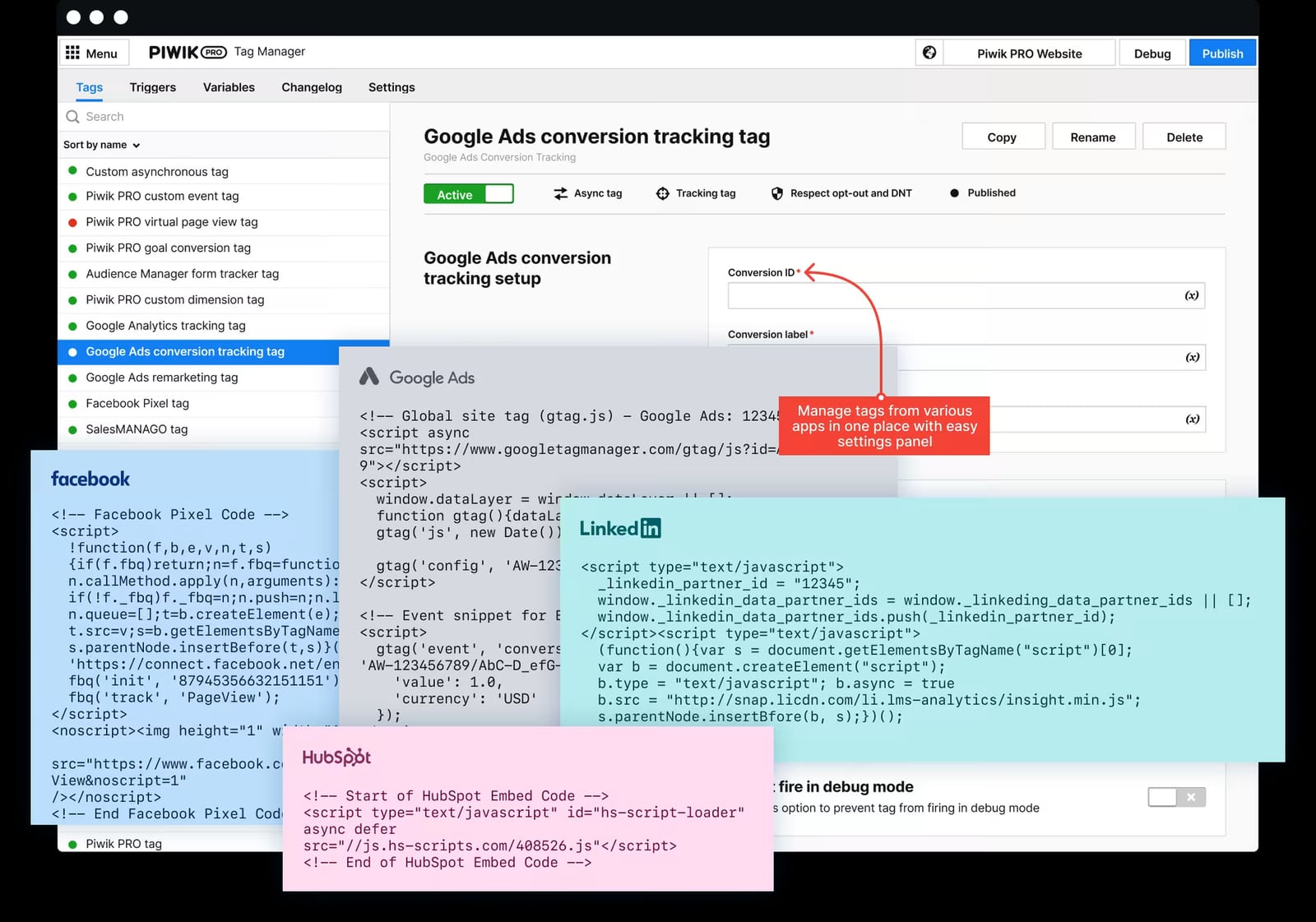
tracking-tag.
At a high level, the three tools occupy different positions in the market:
- Data4 is a website analytics platform built for simplicity and global applicability. It focuses on tracking and analyzing website traffic and performance with an emphasis on ease of use and actionable insights, positioning itself as a straightforward Google Analytics alternative for website owners, marketers, and analysts.
- Piwik PRO is a privacy-focused analytics suite that bundles analytics, tag management, consent management, and a customer data platform into one governed stack. It is aimed at organizations with strict compliance requirements, including healthcare, finance, and government.
- Umami is an open-source, cookie-free analytics platform available as a free self-hosted deployment or a managed cloud service. It targets developers and technically capable teams who want clean, privacy-compliant traffic data with minimal overhead.
Understanding those positions matters more than any single feature row, because each tool is optimized for a different kind of buyer.
Privacy and Compliance
Privacy is where these platforms diverge most sharply, and it is worth being precise about what each one actually does.
Umami: Cookie-Free by Default
Umami collects no personal data, uses no cookies, and is GDPR and CCPA compliant out of the box. Because it does not rely on cookies or cross-site tracking, sites running Umami typically do not need a consent banner for analytics purposes. That is a meaningful operational simplification: fewer banners, less friction for visitors, and one less compliance surface to maintain.
Piwik PRO: Consent and Governance Built In
Piwik PRO takes a different route. It uses cookie-based tracking and pairs that with an integrated consent management platform that handles cookie notices site-wide and adjusts tracking based on visitor choices. For regulated organizations, this integration is the point: consent, analytics, and data activation live in one governed system rather than being stitched together from separate vendors. Piwik PRO also offers EU and US data center options and private cloud deployments, which matters when data residency is a hard requirement.
Data4: Simple, Globally Applicable Tracking
Data4 is designed as a simple, efficient alternative to Google Analytics with multi-domain and multi-language support, including English, Chinese, and Japanese localization. It serves website owners, marketers, and analysts who want reliable traffic and engagement data without the complexity of enterprise suites.
If your compliance team needs a signed Business Associate Agreement or a full consent management platform, Piwik PRO is the natural fit. If you want to avoid consent banners entirely, Umami's cookie-free model is the cleaner path. If you need straightforward, globally usable website analytics, Data4 covers that ground.
Ease of Use and Setup
Data4 vs Piwik PRO vs Umami: Which Analytics Fits? - Ease of Use and Setup.
Setup effort is often the deciding factor for smaller teams, and here the three tools separate clearly.
Umami is set up with a single script tag on the cloud service, or via a Docker deployment if you self-host. The interface is a clean, real-time dashboard that shows visitors, pageviews, bounce rate, visit duration, referrers, and geographic, device, and browser breakdowns. Developers comfortable with Docker, PostgreSQL, or MySQL will find self-hosting genuinely straightforward, and the MIT license means you can inspect and modify the code.
Piwik PRO involves more moving parts because you are adopting a suite rather than a single analytics script. The payoff is that tag management, consent, and analytics are configured together, which reduces long-term integration work for organizations that would otherwise assemble those pieces separately.
Data4 is built around simplicity and quick time-to-insight. Its value proposition is ease of use for website owners, marketers, and analysts who want to understand visitor behavior, traffic sources, and engagement metrics without the overhead of traditional analytics tools. For teams that do not want to manage infrastructure or configure a multi-product suite, that simplicity is the main draw.
Reporting Depth and Features
Data4 vs Piwik PRO vs Umami: Which Analytics Fits? - Reporting Depth and Features.
This is where the comparison becomes use-case specific rather than absolute.
Umami has expanded well beyond basic traffic metrics. It supports custom events for conversions such as button clicks and form submissions, funnel analysis, journey mapping, retention reports, UTM campaign tracking, revenue attribution, heatmaps, session replays, and customizable boards. It also supports team collaboration with role-based access, shareable URLs, and an API for data access and integration. For a cookie-free tool, that is a substantial feature set.
Piwik PRO delivers real-time user insights through dashboards and reports, with custom events, goal conversions, e-commerce tracking, and funnel analysis. Its differentiator is the surrounding suite: a customer data platform for audience segmentation and activation, and a tag manager that removes dependency on third-party tag tools.
Data4 focuses on the core website analytics job: real-time traffic tracking, audience segmentation, conversion analysis, and customizable dashboards. It is aimed at teams that want clear answers about traffic sources and engagement rather than a sprawling analytics stack.
If you need session replay, heatmaps, and retention reporting in a cookie-free package, Umami is the stronger fit. If you need a CDP and governed tag management, Piwik PRO is the stronger fit. If you need clean website performance and campaign insight without extra layers, Data4 is the stronger fit.
Pricing and Ownership Models
The commercial models differ as much as the features:
- Umami offers a free, open-source self-hosted option under the MIT license, plus a managed cloud service with usage-based pricing. Self-hosting means zero software cost indefinitely, provided you can manage the infrastructure.
- Piwik PRO offers a free tier and enterprise pricing, with private cloud and data center options available for organizations that need them.
- Data4 is positioned as a simple, efficient, globally applicable analytics platform, with multi-domain and multi-language support suited to international websites.
For developers who want to avoid recurring subscription costs and are comfortable running their own stack, Umami's self-hosted model is hard to beat on pure economics. For enterprises that need contractual compliance guarantees, Piwik PRO's enterprise tier is the relevant comparison. For teams that want a managed, easy-to-use platform covering multiple domains and languages, Data4 fits that profile.
Which Tool Should You Choose?
A short decision guide based on the criteria above:
- Choose Umami if you are a developer or technically capable team, want cookie-free tracking with no consent banner, and value open-source control or a low-cost cloud tier. It is especially well suited to personal projects, developer portfolios, side projects, and small businesses managing their own deployment.
- Choose Piwik PRO if you operate in a regulated industry such as healthcare, finance, government, or education, and need integrated consent management, a customer data platform, and data residency options from a single vendor.
- Choose Data4 if you want a simple, efficient website analytics platform that is easy to adopt, works across multiple domains and languages, and delivers actionable traffic and engagement insights without the complexity of a full enterprise suite.
If you are still weighing adjacent options, our comparison of Data4 vs Plausible Analytics vs Simple Analytics covers another set of privacy-friendly tools, and Simple Analytics vs Alternatives looks at how several lightweight platforms stack up on privacy, ease of use, and reporting depth.
Related reading
- Piwik PRO vs Matomo: Which Analytics Platform Fits? - Compare Piwik PRO vs Matomo on hosting, privacy, reporting, and pricing. Learn which analytics platform suits your team, and when a simpler tool like Data4 wins.
- Data4 vs Amplitude vs Mixpanel: Which Analytics Tool Fits? - Compare Data4, Amplitude, and Mixpanel across website analytics, product analytics, ease of use, and pricing to find the right tool for your team.
Sources and further reading
- Compare Piwik PRO vs. Umami | G2 - Compare Piwik PRO and Umami head-to-head across pricing, user satisfaction, and features, using data from actual users.
- Umami – Privacy-First Analytics Platform - Umami is the open-source, privacy-first analytics platform. Understand traffic, campaigns, behavior, conversions, and revenue — all in one place, no cookies required.
- Umami vs Piwik PRO — Feature Comparison - Compare Umami and Piwik PRO side by side. See differences in features, pricing, privacy, and which analytics tool is right for your team.
Frequently Asked Questions
Is Umami really cookie-free?
Yes. Umami collects no personal data and uses no cookies, and it is GDPR and CCPA compliant out of the box. In most configurations this means no consent banner is required for analytics.
Does Piwik PRO require a consent banner?
Piwik PRO uses cookie-based tracking and includes an integrated consent management platform. The consent manager handles cookie notices across your site and adjusts tracking based on visitor choices, so consent handling is built into the suite rather than added separately.
Can Data4 replace Google Analytics?
Data4 positions itself as a simple, efficient, and globally applicable alternative to Google Analytics, focused on ease of use and actionable insights for website owners, marketers, and analysts. Whether it fully replaces Google Analytics depends on which specific reports and integrations your team relies on.
Which platform is best for a small website?
For a small site run by a developer, Umami's free self-hosted option or low-cost cloud tier is often the most economical choice. For a small site run by a marketer who wants a managed, easy-to-use platform, Data4 is designed for exactly that profile.
Which platform is best for a regulated industry?
Piwik PRO is built for organizations with strict data protection requirements. It offers HIPAA-compliant hosting, encryption, data anonymization, the ability to sign a Business Associate Agreement, and EU or US data center options.
Do these tools support custom event tracking?
Umami and Piwik PRO both support custom event tracking, goal conversions, and funnel analysis. Data4 covers conversion analysis as part of its core website analytics feature set.
Conclusion
Data4, Piwik PRO, and Umami are not competing for the same buyer, and that is the most useful takeaway from this comparison. Umami wins on openness, cookie-free privacy, and cost efficiency for technical teams. Piwik PRO wins on compliance depth, integrated consent and tag management, and enterprise data governance. Data4 wins on simplicity, global applicability, and quick time-to-insight for website owners, marketers, and analysts who want reliable traffic and engagement data without a heavy stack.
Start by writing down your hardest constraint — a compliance requirement, a self-hosting preference, or a need for multi-domain and multi-language simplicity — and the choice usually makes itself. For a broader view of how lightweight analytics tools compare, see our roundup of Fathom Analytics alternatives.