
How to Ensure Data Privacy Compliance in 2026
Data privacy compliance is no longer a niche legal concern. It affects how you collect website traffic, run marketing campaigns, store customer records, and choose third-party tools. Regulators are enforcing rules more aggressively, and users are more aware of how their personal information is handled. This guide breaks down what data privacy compliance means, which regulations matter most, and the practical steps you can take to reduce risk without slowing down your business.
What Is Data Privacy Compliance?

How to Ensure Data Privacy Compliance in 2026 - What Is Data Privacy Compliance?.
Data privacy compliance means aligning your organization's data practices with the laws and standards that protect personal information. Personal information can include names, email addresses, IP addresses, device identifiers, location data, and behavioral signals such as pages visited or products viewed.
Compliance is not a single checkbox. It requires consistent policies for how data is collected, stored, shared, and deleted. Data privacy compliance also covers how you respond to user requests, how you notify authorities after a breach, and how you vet vendors that process data on your behalf.
Beyond avoiding penalties, compliance supports trust. Customers are more willing to share information with organizations that explain their practices clearly and respect user choices.
Why Data Privacy Compliance Matters
How to Ensure Data Privacy Compliance in 2026 - Why Data Privacy Compliance Matters.
The most immediate reason is financial. GDPR fines can reach 4% of annual global revenue or €20 million, whichever is higher. CCPA penalties can add up per violation, and enforcement actions often include mandatory changes to business practices.
But there are broader operational benefits:
- Stronger customer trust: Transparent data practices reduce friction and improve retention.
- Better data hygiene: Compliance forces you to delete outdated records and limit collection, which reduces storage costs and security risk.
- Fewer vendor surprises: Documenting data flows helps you spot risky integrations before they become liabilities.
- Competitive advantage: Privacy-conscious buyers increasingly prefer vendors that demonstrate compliance.
Major Data Privacy Regulations to Know
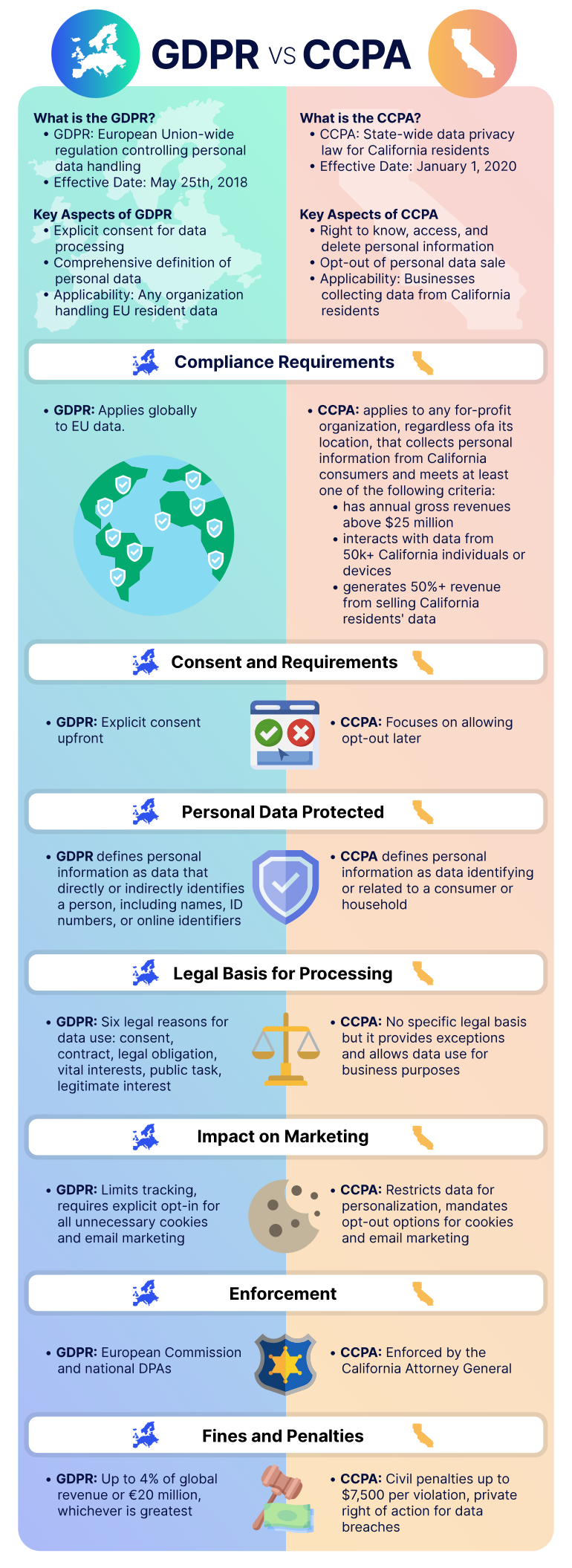
How to Ensure Data Privacy Compliance in 2026 - Major Data Privacy Regulations to Know.
GDPR
The EU's General Data Protection Regulation applies to any organization that processes the personal data of EU residents, regardless of where the organization is based. It is built on seven principles: lawfulness, fairness, transparency, purpose limitation, data minimization, accuracy, storage limitation, integrity, confidentiality, and accountability.
Key GDPR obligations include:
- Establishing a lawful basis for processing, such as consent, contract, or legitimate interest.
- Honoring data subject access requests within one month.
- Notifying supervisory authorities of a breach within 72 hours.
- Appointing a data protection officer where required.
- Conducting data protection impact assessments for high-risk processing.
CCPA and CPRA
The California Consumer Privacy Act, amended by the California Privacy Rights Act, gives California residents rights over their personal information. Businesses must honor requests to access, delete, correct, and opt out of the sale or sharing of personal data. CPRA also introduced the concept of sensitive personal information, which requires additional protections.
Other Regulations to Watch
Depending on your audience, you may also need to consider Brazil's LGPD, Canada's PIPEDA, Japan's APPI, or sector-specific rules such as HIPAA for health data. If you serve a global audience, a privacy-first baseline is more practical than trying to comply with each law in isolation.
How to Ensure Data Privacy Compliance: A Practical Framework
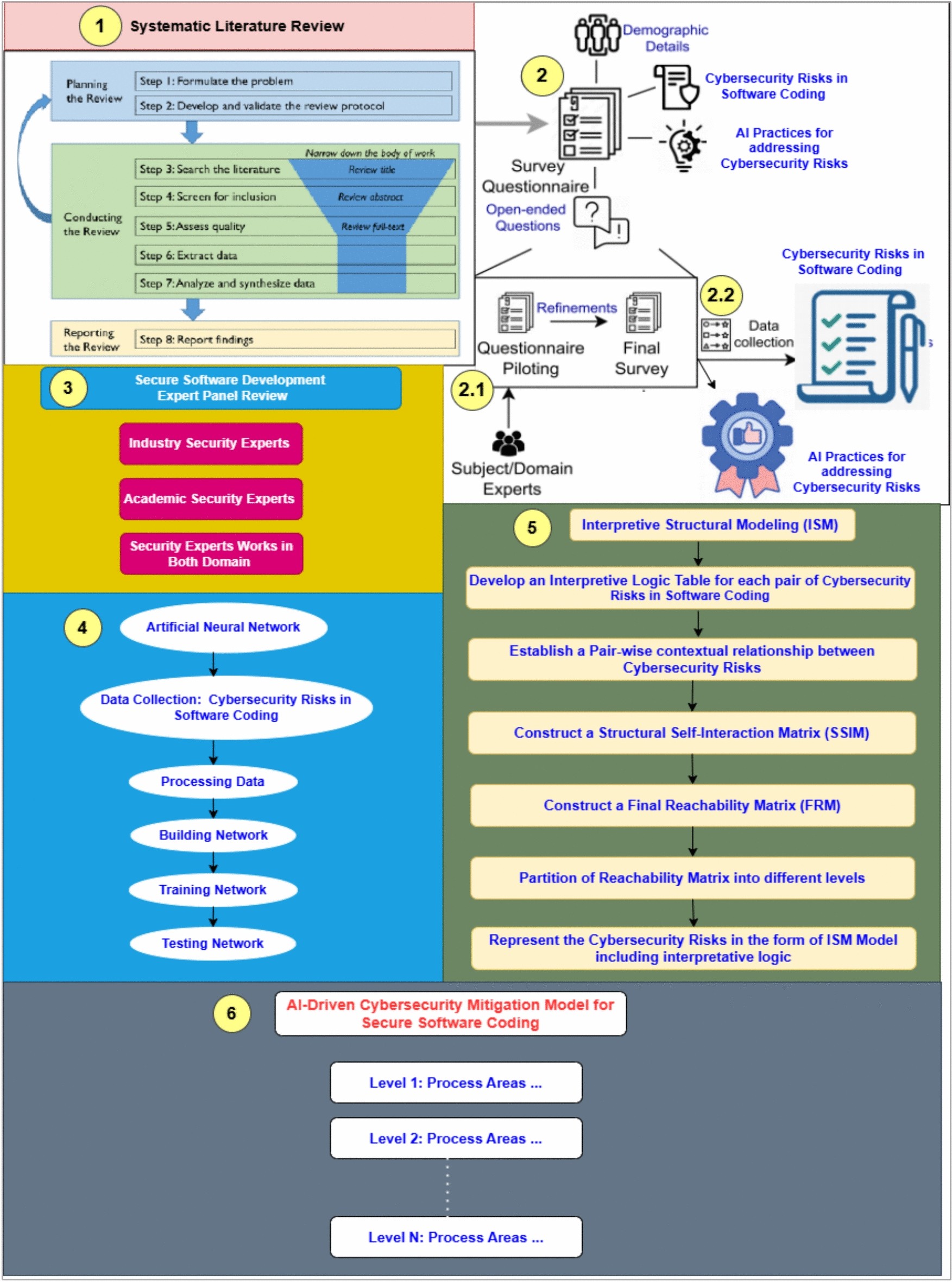
How to Ensure Data Privacy Compliance in 2026 - How to Ensure Data Privacy Compliance: A Practical Framework.
1. Map Your Data Flows
Start by documenting what personal data you collect, where it comes from, where it is stored, who can access it, and when it is deleted. Include website analytics, CRM systems, email platforms, payment processors, and any other tools that touch personal information.
A data map makes it easier to answer regulator questions, complete privacy impact assessments, and identify unnecessary data collection.
2. Apply Data Minimization
Collect only what you need for a specific purpose. If you do not need a user's full name to analyze website performance, do not collect it. Data minimization is a core GDPR principle and a practical way to reduce breach impact.
This principle also applies to your analytics stack. Traditional analytics tools often collect more data than necessary, including full IP addresses and cross-site identifiers. Privacy-focused alternatives can provide the traffic insights you need while collecting less personal information.
3. Choose Privacy-Friendly Website Analytics
Website analytics is a common source of compliance friction. Many tools set third-party cookies, collect full IP addresses, and share data with advertising networks. Under GDPR, this often requires consent banners, which can reduce the accuracy of your traffic data.
Privacy-friendly analytics platforms take a different approach. They typically:
- Do not use third-party cookies.
- Anonymize or truncate IP addresses.
- Avoid cross-site tracking.
- Store data in a specific region.
- Do not sell or share data with ad networks.
Data4, for example, is a website analytics platform designed as a simpler alternative to Google Analytics. It focuses on core metrics such as visitor behavior, traffic sources, and engagement without the complexity of traditional tools. For teams that need global reach, Data4 supports multiple languages and domains, which can simplify analytics for international sites. If you are comparing options, see how Data4 compares to Simple Analytics or review a broader comparison of Data4, Plausible Analytics, and PostHog.
4. Manage Consent Properly
If you rely on consent as your lawful basis, it must be freely given, specific, informed, and unambiguous. Pre-ticked boxes, bundled consent, and dark patterns are not valid. Users must be able to withdraw consent as easily as they gave it.
A consent management platform can help you record choices and pass signals to your analytics and marketing tools. But remember: if you can avoid collecting personal data in the first place, you may not need consent at all.
5. Encrypt and Secure Stored Data
Encryption protects data at rest and in transit. Use HTTPS across your site, encrypt backups, and restrict access to production databases. Security is a legal requirement under GDPR and a practical defense against breaches.
6. Prepare for Data Subject Requests
Users can ask what data you hold, request corrections, or demand deletion. Build a repeatable process for locating and acting on these requests. Automating parts of the workflow reduces response time and human error.
7. Vet Your Vendors
Your compliance posture is only as strong as your weakest vendor. Review the privacy practices of every tool that processes personal data. Ask whether they act as a processor or controller, where data is stored, and whether they have signed a data processing agreement.
8. Train Your Team
Compliance fails when employees do not understand the rules. Provide regular training on data handling, phishing awareness, breach reporting, and the importance of data minimization. Keep records of who completed training and when.
Data Privacy Compliance Checklist
Use this checklist to assess your current position:
- Data inventory and flow map completed
- Lawful basis documented for each processing activity
- Privacy policy updated and written in plain language
- Consent mechanism implemented where required
- Data processing agreements signed with vendors
- Breach response plan tested
- Data subject request workflow in place
- Data retention schedule defined
- Analytics tools reviewed for privacy impact
- Team training completed and documented
Common Compliance Mistakes to Avoid
Collecting data "just in case." Every unnecessary field increases your risk. Collect only what you need now.
Ignoring third-party scripts. Marketing pixels, embedded videos, and social widgets can all collect personal data. Audit every script on your site.
Treating compliance as a one-time project. Laws change, tools change, and your data flows change. Schedule regular reviews.
Assuming small businesses are exempt. GDPR applies based on what you do with data, not your company size. CCPA has thresholds, but many small businesses still fall within scope.
Relying on consent banners alone. A banner does not make non-compliant tracking compliant. The underlying data collection must also be lawful.
Related reading
- Data4 vs Google Analytics vs PostHog: Which Fits You? - Compare Data4, Google Analytics, and PostHog for website and product analytics. See simplicity, privacy, pricing, and which tool fits your team best.
- Data4 vs Simple Analytics: Which Web Analytics Tool Fits You? - Compare Data4 and Simple Analytics for website analytics. See simplicity, privacy, compliance, pricing, traffic recovery, and which tool fits your needs best.
- Piwik PRO Review 2026: Privacy-First Analytics Tested - Evidence-based Piwik PRO review covering HIPAA and GDPR compliance, pricing signals, setup difficulty, strengths, limitations, and who should choose it.
Sources and further reading
- What Is Data Privacy Compliance? Importance & Benefits - Salesforce - Data privacy compliance is a critical practice for any modern business, as it involves legal regulations you must abide by to protect customer data.
- Data Privacy Best Practices: Ensure Compliance & Security - Fortra - Oct 14, 2025 ... What Is Data Privacy Best Practices? · Minimal Data Collection: Only collect the data that is absolutely necessary. · Encrypt Data: Sensitive ...
Frequently Asked Questions
What is the difference between data privacy and data security?
Data privacy concerns how personal information is collected, used, and shared, and whether individuals have control over it. Data security concerns how that information is protected from unauthorized access, loss, or theft. You need both: strong security supports privacy, but secure storage of data you should not have collected is still a compliance problem.
Do I need consent for website analytics?
It depends on what your analytics tool collects. If it uses cookies or other identifiers to track individuals across sessions or sites, you likely need consent under GDPR. If it collects only aggregated, anonymized data without cookies, consent may not be required. Privacy-friendly analytics tools are designed to reduce or eliminate the need for consent banners.
How long should I keep personal data?
Only as long as necessary for the purpose you collected it. Define retention periods for each data category and automate deletion where possible. GDPR requires storage limitation, and CCPA encourages data minimization.
What should I do after a data breach?
Contain the breach, assess the risk to individuals, and notify the relevant supervisory authority within 72 hours if the breach is likely to result in a risk to people's rights and freedoms. If the risk is high, you must also inform affected individuals without undue delay.
Can I use Google Analytics and still be compliant?
Google Analytics can be configured for compliance, but it requires careful setup, consent management, and data processing agreements. Many organizations find that privacy-focused alternatives such as Data4, Plausible, or Fathom offer a simpler path to compliance with fewer configuration steps. Compare your options in this Data4 vs Google Analytics vs PostHog guide.
Conclusion
Ensuring data privacy compliance is an ongoing process, not a one-time fix. It requires understanding the regulations that apply to you, minimizing the data you collect, choosing tools that respect user privacy, and building repeatable processes for requests and breaches.
Start with a data map and a compliance checklist. Review your analytics stack and marketing tools for privacy impact. Choose platforms that align with your compliance goals rather than forcing you to work around them. The result is lower legal risk, cleaner data, and stronger trust with the people who visit your site.