
Data4 vs Amplitude vs PostHog: Which Analytics Tool Fits Your Team?
Choosing between Data4, Amplitude, and PostHog starts with one honest question: are you measuring website traffic, or are you measuring product behavior? The answer determines which tool will feel effortless and which will feel like overkill.
Data4 is a website analytics platform built for teams that want clear traffic, engagement, and conversion data without the complexity of GA4. Amplitude and PostHog are product analytics platforms designed to answer deeper questions about user journeys, retention, and feature adoption. They overlap in some areas, but they solve fundamentally different problems.
This comparison breaks down what each tool does best, where they fall short, and how to pick the right one for your specific use case.
The Core Difference: Website Analytics vs Product Analytics
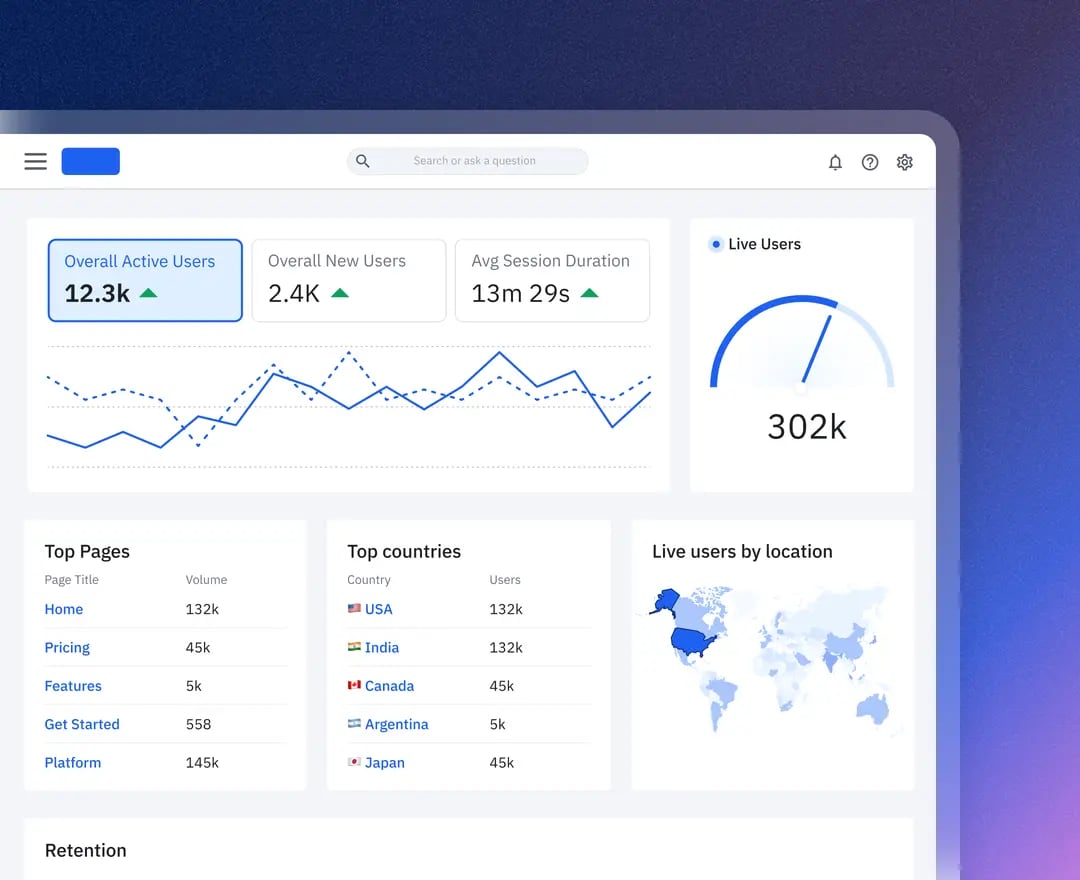
Amplitude product interface.
The most important distinction is the lens each tool uses.
Data4 looks at your website as a whole. It answers questions like:
- Where is my traffic coming from?
- Which pages keep visitors engaged?
- Which campaigns drive conversions?
- How does performance vary by region or device?
Amplitude and PostHog look at individual users and their actions. They answer questions like:
- Which steps in my signup flow cause drop-off?
- Do users who invite teammates retain longer?
- Which feature should I build next?
- What happened in the session before a user churned?
If you run a content site, e-commerce store, or marketing-led website, Data4's focus matches your needs. If you run a web app, SaaS product, or mobile app, Amplitude or PostHog will serve you better.
Data4: Simple Website Analytics Without the GA4 Headache
Data4 positions itself as a straightforward alternative to Google Analytics. Its value proposition is simple: understand your website traffic and performance without wrestling with complex event models, confusing reports, or steep learning curves.
Where Data4 Excels
Ease of use. Data4 is designed for website owners, marketers, and analysts who need actionable insights quickly. Customizable dashboards and real-time traffic tracking mean you spend less time configuring and more time deciding.
Global accessibility. Data4 supports multiple languages, including Chinese, English, and Japanese, with domain-specific localization. This makes it a strong choice for international teams that need analytics in their local language and context.
Marketing-focused insights. Traffic sources, audience segmentation, and conversion analysis are first-class citizens. If your job is optimizing campaigns and improving user experience on a marketing site, Data4 gives you the metrics you need without the noise.
Where Data4 Falls Short
Data4 is not built for deep product analytics. It won't give you sophisticated cohort retention curves, feature-level funnels, or A/B testing infrastructure. If your team needs to understand how users interact with a web application at the event level, you'll eventually hit a ceiling.
For teams comparing Data4 against other website analytics options, our Data4 vs Contentsquare comparison and Data4 vs Similarweb comparison explore how it stacks up in more detail.
Amplitude: Deep Behavioral Analytics for Product Teams
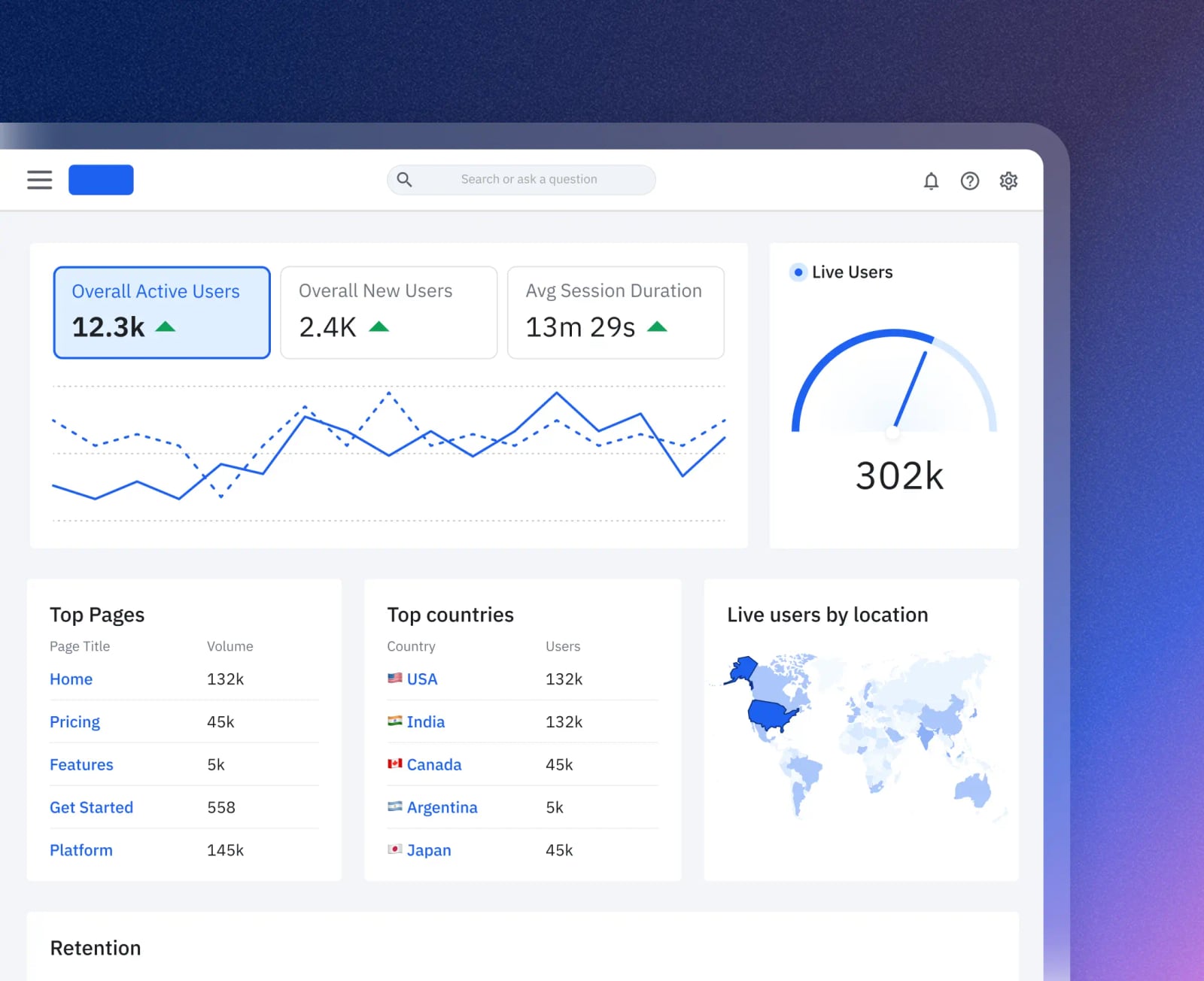
Amplitude product interface.
Amplitude is a comprehensive digital analytics platform built for product managers, engineers, and data analysts. It goes far beyond pageviews to track every meaningful user action and turn that data into product decisions.
Where Amplitude Excels
Behavioral analytics depth. Amplitude's cohort analysis, funnel analysis, and retention analysis are industry-leading. You can segment users by any combination of properties and behaviors, then compare how different cohorts retain over time.
AI-powered workflows. Amplitude's AI features, including Global Agent and Custom Agents, let teams query data using natural language and trigger cross-tool actions. This reduces the bottleneck of waiting for analysts to pull reports.
Experimentation built in. A/B testing and feature experimentation live alongside your analytics. You can detect friction in a funnel, launch an experiment to fix it, and measure the impact without switching tools.
Integration ecosystem. Amplitude connects with tools like Slack, Jira, and GitHub through MCP connectors, making it easier to embed insights directly into your team's existing workflows.
Where Amplitude Falls Short
Amplitude's power comes with complexity. Setting up event tracking, defining properties, and building meaningful analyses requires technical expertise and ongoing maintenance. For a marketing team that just wants to see traffic sources and page performance, Amplitude is overkill—and its pricing reflects that.
PostHog: The All-in-One Platform for Engineers
PostHog takes a different approach. It's an all-in-one product analytics and AI-powered developer platform that combines analytics, session replay, feature flags, experiments, surveys, and error tracking in a single tool.
Where PostHog Excels
All-in-one scope. PostHog bundles product analytics, web analytics, session replay, feature flags, experiments, surveys, error tracking, and even a managed data warehouse. For engineering-led teams, this eliminates the need to stitch together five different tools.
Generous free tier. PostHog's usage-based pricing means over 90% of companies use it for free. Spike detection helps prevent surprise bills, and transparent pricing makes it predictable for growing teams.
Self-hosting and data control. PostHog can be self-hosted, giving teams full control over their data. This is a major advantage for privacy-conscious organizations or those with strict compliance requirements.
Developer-first workflow. PostHog can automatically diagnose problems, fix bugs, and generate pull requests. It's designed for teams that want analytics tightly integrated with their development workflow. The platform serves over 500,000 teams, including Arena, ElevenLabs, Exa, and Hasura.
Context warehouse. With integrations to 120+ external sources, PostHog unifies data from across your stack into a single queryable warehouse.
Where PostHog Falls Short
PostHog's developer-first orientation means non-technical users may find it intimidating. While it includes web analytics, that's not its primary focus—marketing teams looking for simple traffic reports will find more than they need. The sheer number of features can also make it harder to know where to start.
For teams exploring session replay and heatmap tools, our Microsoft Clarity competitors guide covers PostHog and other options in that category.
Head-to-Head Comparison
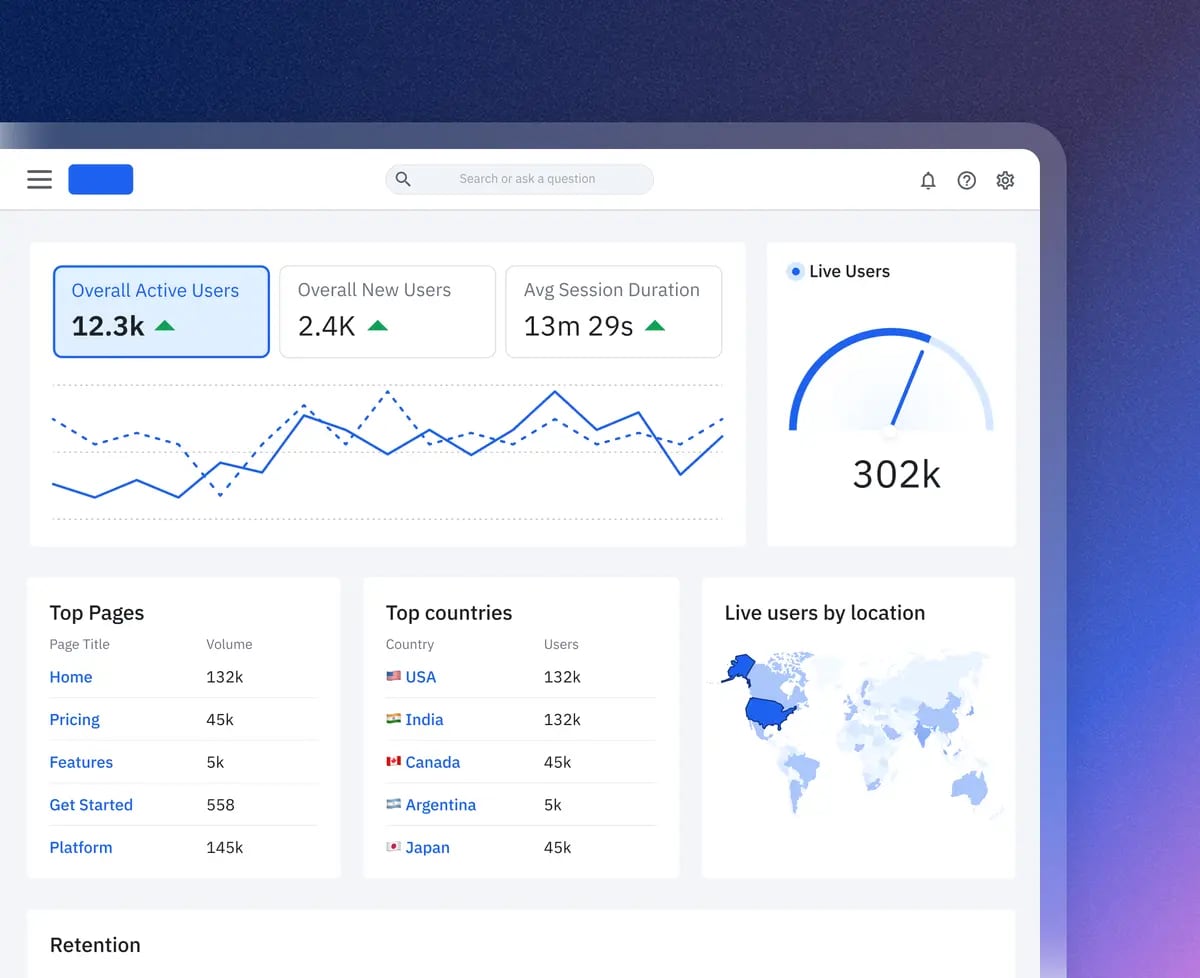
Amplitude product interface.
| Capability | Data4 | Amplitude | PostHog |
|---|---|---|---|
| Primary focus | Website traffic & marketing analytics | Product behavior & retention | All-in-one product & developer analytics |
| Best for | Marketers, website owners, content teams | Product managers, data analysts | Engineers, product teams |
| Ease of setup | High | Medium | Medium |
| Learning curve | Low | High | Medium-High |
| Session replay | Not a core focus | Yes | Yes |
| Feature flags & experiments | No | Yes | Yes |
| Cohort & retention analysis | Limited | Excellent | Excellent |
| AI-powered insights | Not a core focus | Yes (Global Agent, Custom Agents) | Yes (autonomous fixes, PR generation) |
| Self-hosting | Not a core focus | No | Yes |
| Free tier | Varies by plan | Limited free plan | Generous usage-based free tier |
| Multi-language support | Yes (Chinese, English, Japanese) | Not a core focus | Not a core focus |
How to Choose: A Decision Framework
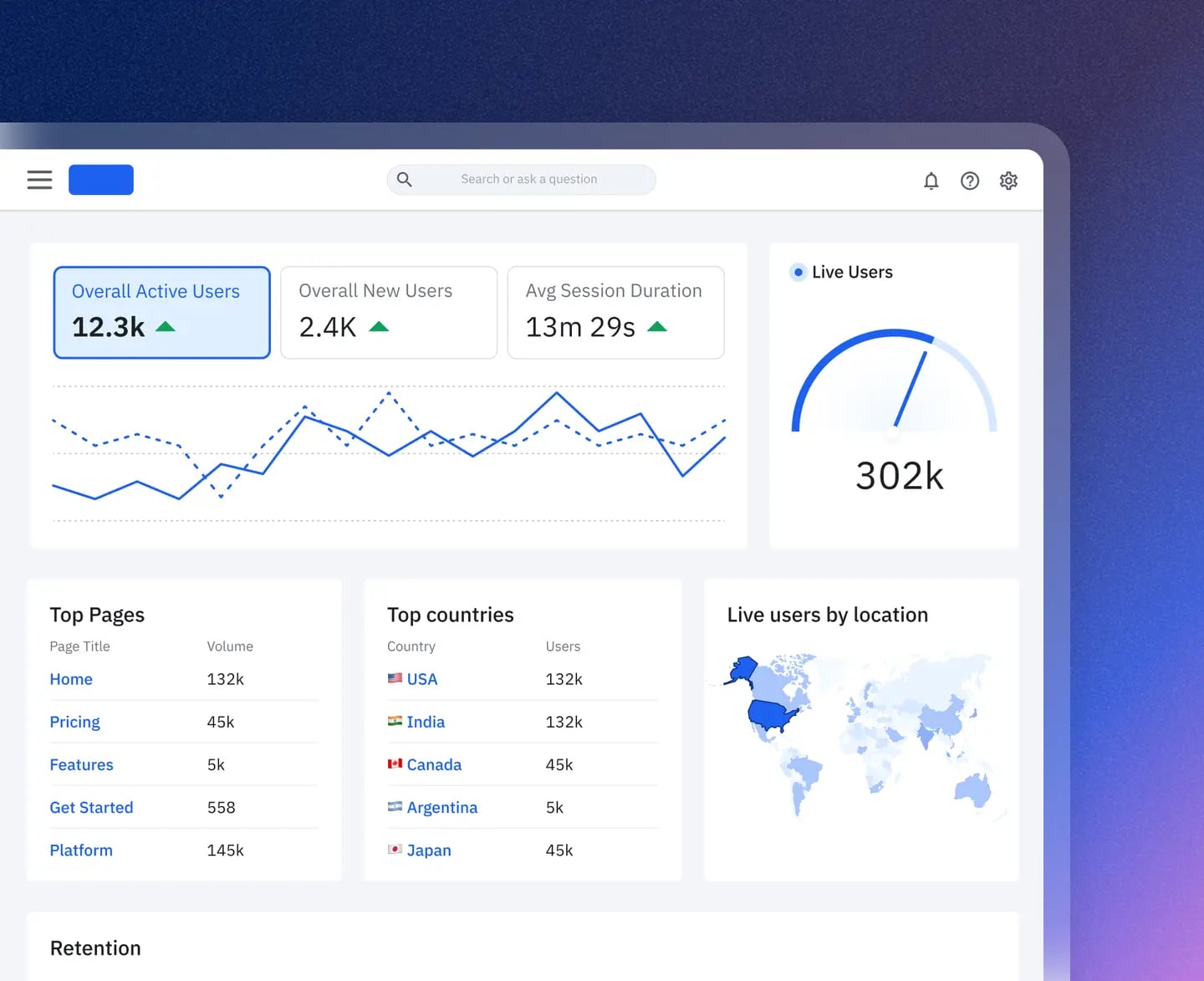
Amplitude product interface.
Choose Data4 if...
- You primarily need website traffic and marketing analytics
- Your team includes marketers who want simple, clear dashboards
- You need multi-language support for an international audience
- You're replacing Google Analytics and want a simpler alternative
- You don't need deep product behavior analysis
Choose Amplitude if...
- You need best-in-class behavioral analytics for a web or mobile app
- Your team includes product managers and data analysts
- You want AI-powered querying and cross-tool workflows
- Experimentation and retention analysis are core to your process
- You're willing to invest in event tracking setup and maintenance
Choose PostHog if...
- You want analytics, session replay, feature flags, and experiments in one tool
- Your team is engineering-led and comfortable with developer tools
- You need self-hosting or strict data control
- Budget is a concern and you want a generous free tier
- You want analytics integrated with your development workflow
Practical Example: Tracking a Signup Funnel
Let's make this concrete. Imagine you run a SaaS product and want to understand why signups are dropping.
With Data4, you'd see that your signup page gets 10,000 visits per month, with a 3% conversion rate. You can identify which traffic sources send the most visitors and which pages lead to signups. But you can't easily see what happens after someone clicks "Sign Up."
With Amplitude, you'd build a funnel from landing page visit → signup click → account creation → first feature use. You'd discover that 40% of users drop off between signup click and account creation, and you'd segment by browser, device, or acquisition channel to find the cause. Then you'd launch an A/B test to fix it.
With PostHog, you'd do everything Amplitude does, but you could also watch session replays of users who dropped off, check error logs for failed API calls, and use feature flags to roll out a fix gradually—all without leaving the platform.
Pricing Considerations
Pricing models differ significantly across the three tools.
Data4 positions itself as an accessible alternative to Google Analytics, typically with straightforward pricing aimed at website owners and small-to-medium businesses. The emphasis is on simplicity rather than enterprise-scale event volume.
Amplitude uses a tiered model based on event volume and features. Advanced features like AI agents and experimentation typically require higher-tier plans. For product teams at scale, the cost is justified by the depth of insight. For small teams, it can be significant.
PostHog uses transparent, usage-based pricing with a generous free tier. Over 90% of companies use it for free, and spike detection prevents unexpected bills. This makes it the most budget-friendly option for startups and small product teams.
For a broader look at analytics pricing and alternatives, our Google Analytics alternatives guide compares several tools across price points.
Related reading
- Clicky Review 2026: Features, Pricing, and Real-World Limits - Evidence-based Clicky review covering real-time analytics, privacy, pricing tiers, setup, limitations, and which website owners actually benefit most.
- Data4 vs Piwik PRO vs GoatCounter: Which Analytics Fits? - Compare Data4, Piwik PRO, and GoatCounter for website analytics. See privacy, ease of use, compliance, pricing, and which tool fits your needs.
Sources and further reading
- Adding Analytics | Gatsby - Why use analytics? Most professional website teams using Gatsby use one of three types of analytics services on their website: Google…
- Post Affiliate Pro - Send your event data from RudderStack to Post Affiliate Pro.
- Integrations | Mailable.dev - Amplitude. Analytics · PostHog. Analytics. Footer. Describe it. Ship beautiful email. Start free, or talk to us about designing email at scale ...
Frequently Asked Questions
Is Data4 a replacement for Google Analytics?
Yes. Data4 is explicitly positioned as a simpler, more accessible alternative to Google Analytics, with a focus on ease of use, actionable insights, and multi-language support for international teams.
Can Amplitude and PostHog track website traffic like Data4?
They can track basic website metrics, but that's not their strength. Both include web analytics features, but their real power is in event-based product analytics: funnels, cohorts, retention, and feature adoption. If website traffic is your primary concern, Data4 is the better fit.
Which tool is best for a small startup?
It depends on what you're building. A content site or marketing-led business will get more value from Data4's simplicity. A SaaS startup building a product should consider PostHog first, thanks to its generous free tier and all-in-one feature set.
Does PostHog really offer all those features for free?
PostHog's free tier is usage-based and generous—over 90% of companies use it for free. You pay as your event volume and feature usage grow, with spike detection to prevent surprise bills.
Is Amplitude worth the cost compared to PostHog?
For teams that need the deepest behavioral analytics, AI-powered querying, and mature experimentation workflows, Amplitude can justify its cost. For teams that want a broad feature set at a lower price point, PostHog often delivers more value per dollar.
Can I self-host any of these tools?
PostHog supports self-hosting, which is a significant advantage for privacy-conscious teams. Amplitude and Data4 are typically cloud-based services.
Conclusion
Data4, Amplitude, and PostHog are all excellent tools—but they're excellent for different reasons.
Data4 wins when you need simple, globally accessible website analytics without the complexity of GA4. It's the right choice for marketers, content teams, and website owners who want clear traffic and conversion insights.
Amplitude wins when you need the deepest behavioral analytics, AI-powered workflows, and mature experimentation. It's the right choice for product teams at companies where data-driven product decisions are central to growth.
PostHog wins when you want an all-in-one platform that combines analytics, session replay, feature flags, and experiments at an accessible price. It's the right choice for engineering-led teams that value data control and developer workflow integration.
Start by defining the questions you need to answer. If they're about pages, traffic, and campaigns, choose Data4. If they're about users, actions, and retention, choose Amplitude or PostHog. The right tool is the one that answers your questions with the least friction.