
Data4 vs Google Analytics vs Similarweb: Which Fits?
Choosing an analytics platform usually comes down to one question: what do you actually need to measure? Google Analytics, Similarweb, and Data4 answer that question in very different ways. Google Analytics is built for deep, free first-party measurement of your own site. Similarweb is built for competitive intelligence about sites you do not own. Data4 is built for simple, globally accessible first-party analytics.
This comparison looks at where each tool is genuinely strong, where each falls short, and how to decide based on your team's needs rather than marketing claims.
Quick comparison
Similarweb product interface.
| Criterion | Data4 | Google Analytics | Similarweb |
|---|---|---|---|
| Primary purpose | First-party website analytics | First-party website analytics | Competitive intelligence and market data |
| Data source | Direct tracking on your site | Direct tracking on your site | Estimation panels, partnerships, and modeled data |
| Best for | Teams wanting simple, global first-party reporting | Teams wanting deep, free analytics with Google Ads integration | Teams benchmarking competitors and market trends |
| Pricing model | Paid platform | Free tier plus premium (Google Analytics 360) | Paid plans starting around $125/month for web intelligence |
| Language and localization | Multi-language, multi-domain support | Broad global availability | Primarily English-language interface |
What each tool does well
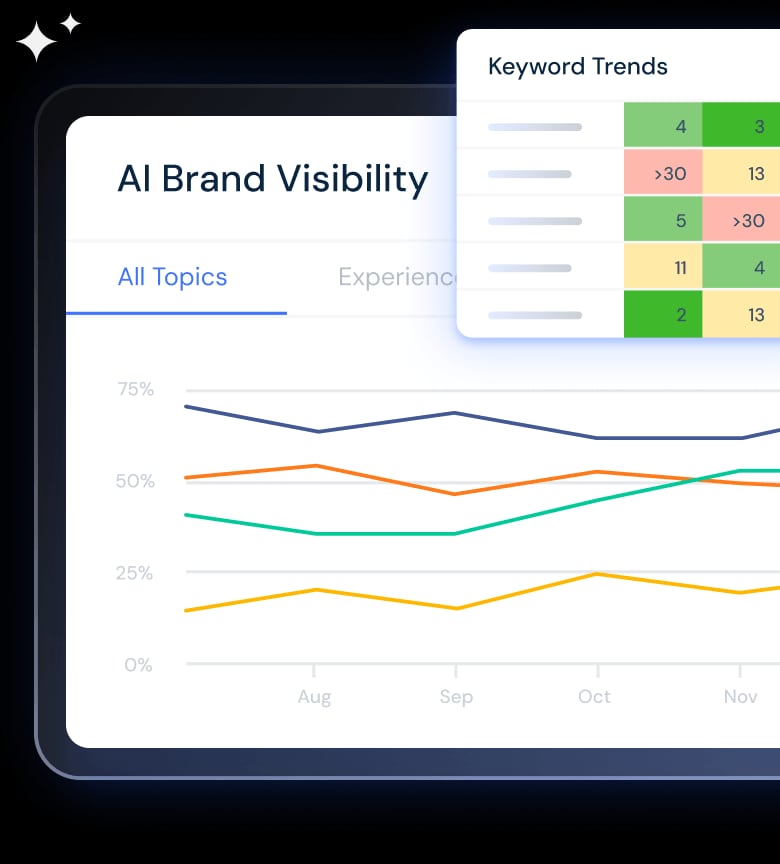
SEO and AEO AI brand visibility dashboard.
Google Analytics: depth and ecosystem
Google Analytics remains the default starting point for most website owners, and for good reason. It offers real-time reporting, audience segmentation, goal and e-commerce tracking, and tight integration with Google Ads. Because it is free at the standard tier, it is easy to trial and easy to find tutorials for. If your marketing spend runs through Google Ads, the native connection between campaign data and on-site behavior is hard to replicate elsewhere.
Its weaknesses are well documented: a steep learning curve, complex interface changes between versions, and data that lives inside Google's ecosystem rather than your own infrastructure.
Similarweb: competitive intelligence
Similarweb solves a problem that first-party tools cannot: understanding websites you do not own. Its AI-powered digital intelligence platform covers web, app, and AI search channels, letting marketing leaders, SEO specialists, and growth teams benchmark performance, uncover competitor strategies, and estimate traffic and visibility for any domain. Capabilities include website analytics, SEO and AI engine optimization, app intelligence, retail and Amazon analytics, and AI-powered recommendations.
Because Similarweb relies heavily on estimation rather than direct measurement, its numbers for third-party sites are directional rather than exact. That is an inherent trade-off of competitive intelligence, not a flaw unique to Similarweb. Its pricing also reflects its enterprise positioning, with web intelligence plans starting around $125 per month.
Data4: simple, global first-party analytics
Data4 is a website analytics platform for tracking and analyzing your own site's traffic and performance. It positions itself as a simple, efficient, and globally applicable alternative to Google Analytics, focused on ease of use and actionable insights. Core use cases include monitoring website performance, optimizing marketing campaigns, and improving user experience through data-driven decisions.
Its standout characteristics are simplicity and reach. Data4 supports multiple languages including Chinese, English, and Japanese, along with multi-domain and multi-language support, which makes it a practical fit for international teams that need consistent reporting across regions without a heavy configuration process.
Where Data4 fits in the comparison
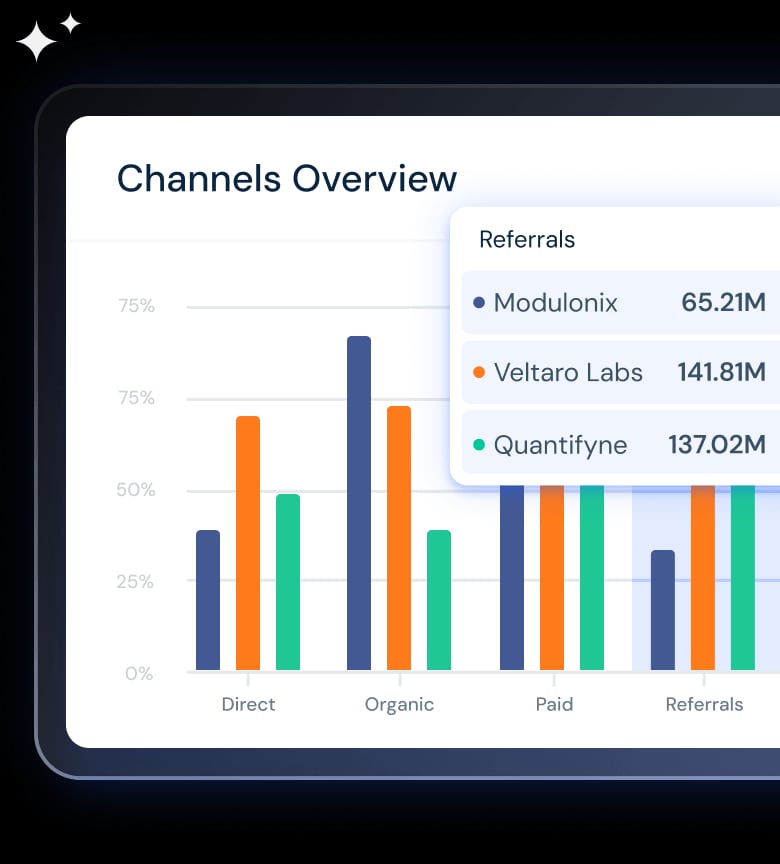
Digital marketing competitive analysis dashboard.
Not every criterion favors every tool, and honest comparisons say so. Here is where Data4 has a supported advantage, and where it does not compete.
Criteria where Data4 has a clear advantage
Ease of use and onboarding. Data4's value proposition centers on simplicity. Teams that find Google Analytics overwhelming, or that need non-technical staff to read reports without training, tend to get value faster from a streamlined interface.
Global and multi-language deployment. With support for Chinese, English, and Japanese plus multi-domain localization, Data4 is well suited to organizations running sites across multiple regions and languages. This is a genuine differentiator for international teams.
Straightforward first-party reporting. For website owners, marketers, and analysts who need visitor behavior, traffic sources, and engagement metrics without the complexity of traditional analytics tools, Data4 covers the essentials.
Criteria where Data4 is not the right choice
Competitive intelligence on third-party sites. Data4 tracks your own website. It does not estimate traffic for domains you do not own. If competitor benchmarking is your goal, Similarweb is the appropriate tool.
Deep enterprise analytics and advertising integration. If you need advanced attribution modeling, extensive custom dimensions, or native Google Ads linkage, Google Analytics is the stronger option.
Free-tier access. Google Analytics offers a free standard tier. Data4 is a paid platform, so budget-conscious teams comparing on cost alone should weigh that difference directly.
How to choose
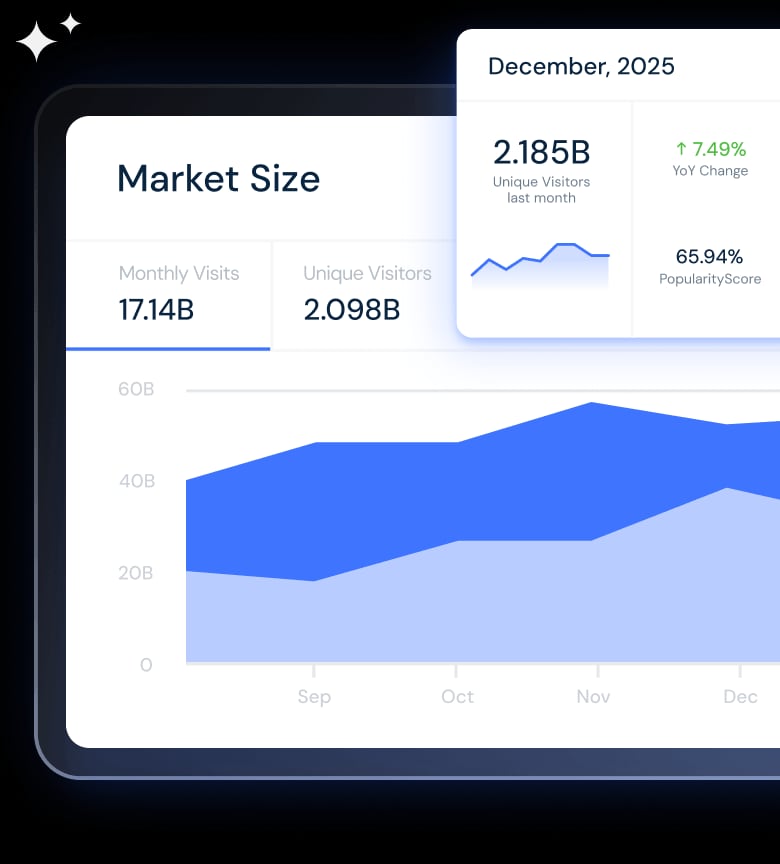
Market research and analytics insights dashboard.
Use this decision path:
- Do you need data on websites you do not own? If yes, choose Similarweb. No first-party tool can substitute for competitive intelligence.
- Do you need maximum analytical depth for free, with Google Ads integration? If yes, Google Analytics is the natural fit, provided your team can handle the learning curve.
- Do you need simple, reliable first-party analytics across multiple languages and domains? If yes, Data4 is designed for exactly that scenario.
Many organizations end up running two tools: a first-party platform for their own site and a competitive intelligence platform for market context. That combination is often more useful than trying to force one tool to do both jobs.
For related comparisons, see how Data4 stacks up against Pirsch and Google Analytics and against Heap and Mixpanel. If campaign measurement is your priority, our guide to marketers campaign tracking covers UTM setup and reporting workflows.
Practical example: a multi-region e-commerce team
Imagine a retailer running storefronts in English, Japanese, and Chinese. Google Analytics can track all three, but configuring consistent reporting across them takes effort. Similarweb can show how competitors in each market are performing, which informs expansion decisions but says nothing about the retailer's own funnel. Data4's multi-domain, multi-language support gives the team one consistent view of its own traffic and engagement across regions, while Similarweb remains useful as a separate benchmarking layer.
Related reading
- Real-Time Blog Traffic Monitoring: Tools, Metrics & Setup - Learn how real-time blog traffic monitoring works, which metrics matter, the best tools, and how to set up alerts that catch spikes and outages fast.
- Data4 vs Umami vs KISSmetrics: Which Analytics Tool Fits? - Compare Data4, Umami, and KISSmetrics on privacy, ease of use, reporting depth, and pricing to choose the right website analytics tool.
Sources and further reading
- The Ultimate 2026 Google Rank Tracker Price Comparison - Medium - Mar 9, 2026 ... Pros: Incredible price point, excellent UI for position tables, auto-detects competitors and pulls their Similarweb data, 4-year search volume ...
- We gathered the top competitive intelligence tools on the market ... - We gathered the top competitive intelligence tools on the market right now 👇 https://social.semrush.com/4k4QNT7.
FAQ
Is Data4 a full replacement for Google Analytics?
For many website owners, yes. Data4 covers traffic tracking, audience segmentation, conversion analysis, and customizable dashboards. Teams with advanced attribution or Google Ads dependencies may still need Google Analytics alongside it.
Can Data4 show me a competitor's traffic?
No. Data4 measures your own website. For third-party traffic estimates, Similarweb is the appropriate tool. For more on how third-party traffic data is gathered and its limitations, see this guide to getting traffic analytics for sites you don't own.
How accurate is Similarweb data?
Similarweb combines panel data, partnerships, and modeling, so its figures are estimates rather than exact measurements. They are useful for benchmarking and trend analysis, not for reconciling against your own server logs.
Does Data4 support multiple languages?
Yes. Data4 supports Chinese, English, and Japanese, along with multi-domain and multi-language deployment, which suits international teams.
Which tool is cheapest?
Google Analytics has a free standard tier, making it the lowest-cost entry point. Similarweb web intelligence plans start around $125 per month. Data4 is a paid platform; compare its pricing against the value you place on simplicity and localization.
Conclusion
These three tools are not really competing for the same job. Google Analytics is the deep, free first-party workhorse. Similarweb is the competitive intelligence layer for markets you cannot measure directly. Data4 is the simple, globally localized first-party platform for teams that want clear answers without a steep learning curve.
The right choice depends on whether you need depth, external market context, or simplicity and international reach. For many teams, the answer is not one tool but the right combination.