
Data4 vs Fathom Analytics: Choosing the Right Simple Analytics Platform
Website analytics shouldn't require a PhD to understand. Both Data4 and Fathom Analytics promise simplicity as a core value, but they approach it from fundamentally different angles. Data4 positions itself as a globally accessible, straightforward replacement for Google Analytics, while Fathom stakes its reputation on uncompromising privacy compliance. This comparison examines where each platform excels, where they fall short, and which one aligns with your actual needs.
Understanding the Core Philosophies
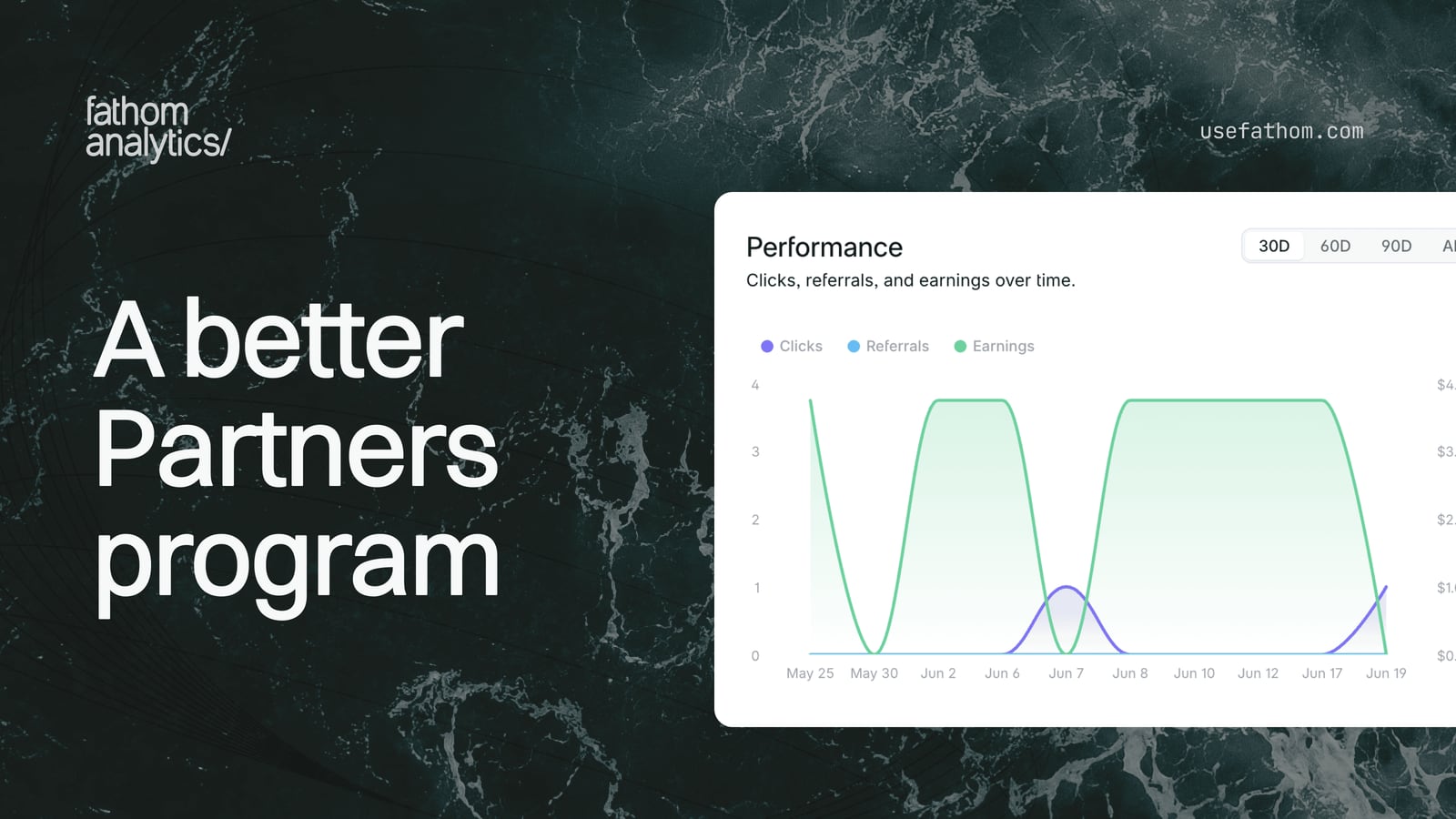
A better Partners program.
Before diving into feature checklists, it's worth understanding what drives each product. These philosophies shape every dashboard decision, every feature priority, and ultimately, the experience you'll have as a user.
Data4: Global Simplicity Without Borders
Data4 builds its identity around being a reliable, no-fuss analytics solution that works everywhere. The platform emphasizes multi-language support—offering interfaces in Chinese, English, and Japanese—and domain-specific localization. This signals a deliberate strategy to serve international businesses and multilingual website owners who find traditional analytics tools either too complex or too Western-centric.
The value proposition centers on actionable insights without the overwhelm. Data4 targets website owners, marketers, and analysts who need to understand visitor behavior, traffic sources, and engagement metrics quickly. Its feature set likely includes real-time traffic tracking, audience segmentation, conversion analysis, and customizable dashboards, all wrapped in an interface designed for immediate comprehension rather than deep configuration.
Fathom Analytics: Privacy as the Product
Fathom Analytics takes a different path. Privacy isn't a feature checkbox—it's the entire foundation. The platform was built to comply with GDPR, CCPA, and other privacy regulations from day one, using a single line of code for installation and processing data without cookies or intrusive tracking methods.
Fathom's business model is transparent: customers pay for software, so Fathom never needs to sell or exploit visitor data. This honesty extends to features like forever data retention, real-time metrics, and automatic bot filtering. The platform serves over a million websites and counts IBM, GitHub, and Tailwind among its users, proving that privacy-first analytics can scale.
Feature Comparison: Where They Overlap and Diverge
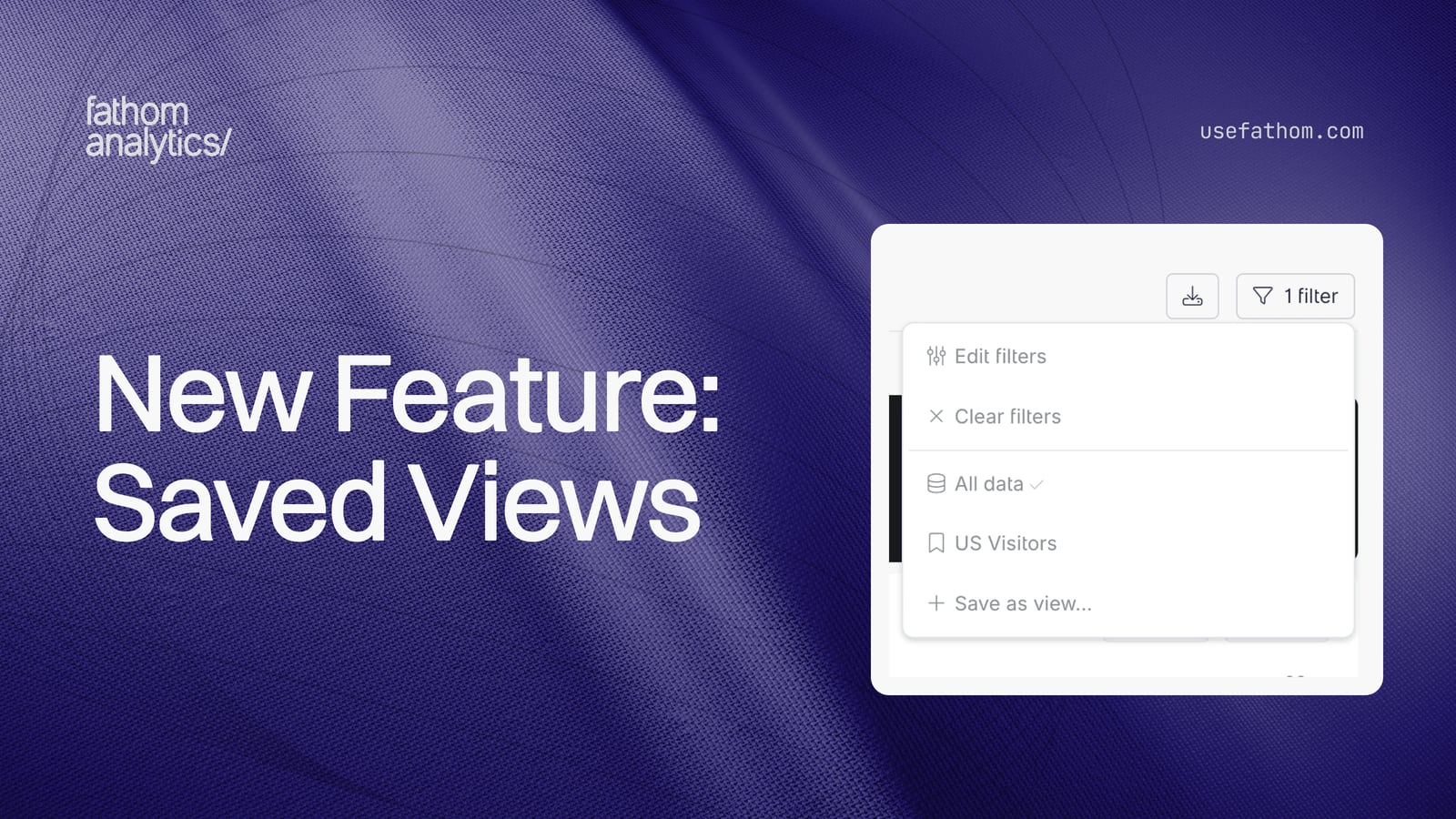
Saved Views.
Both platforms aim to simplify analytics, but their feature priorities reveal different assumptions about what "simple" means.
Dashboard and User Experience
Data4 focuses on making analytics immediately understandable across languages and cultural contexts. The dashboard likely prioritizes visual clarity and quick access to key metrics, with customization options that let users surface the data most relevant to their business goals.
Fathom offers a single-page dashboard designed for at-a-glance understanding. It includes features Google Analytics lacks, such as dark mode, one-click data filters, and the ability to make dashboards public. The interface is intentionally minimal, showing only the metrics that matter most to content creators and small business owners.
Data Accuracy and Bot Filtering
Fathom takes a strong stance on accuracy. It doesn't use data sampling or machine learning to estimate traffic—every visitor shown is a verified human. The platform automatically blocks bots, crawlers, and DDoS attacks without requiring any setup from the user.
Data4's approach to accuracy isn't publicly documented in the same detail, but its positioning as a Google Analytics alternative suggests it addresses the sampling and bot-filtering frustrations that drive users away from GA4.
Privacy and Compliance
This is where the platforms diverge most sharply. Fathom has invested heavily in legal compliance, developing methods to process EU visitor data on EU servers and moving toward a model that requires no consent banners at all. The platform's privacy stance is its primary competitive advantage.
Data4 doesn't market itself primarily on privacy features. Its strength lies in global applicability and multi-language support rather than regulatory compliance. For businesses operating in regions with strict data protection laws, this distinction matters. If you're evaluating analytics tools for regulated industries, understanding HIPAA-compliant analytics requirements can help clarify what you actually need.
Global Reach and Localization
Data4's multi-language interface gives it a clear advantage for international teams. The platform's support for Chinese, English, and Japanese—with domain-specific localization—makes it uniquely suited for businesses targeting Asian markets or managing multilingual content strategies.
Fathom operates globally but doesn't offer localized dashboards. Its interface remains English-only, which may create friction for teams working primarily in other languages.
Script Size and Performance
Fathom's tracking script is remarkably lightweight at under 2KB, served from a global CDN. This minimal footprint means it won't affect page speed scores or Core Web Vitals—a genuine advantage over Google Analytics, which loads scripts approaching 30KB when combined with Tag Manager.
Data4's script size isn't publicly documented, but as a modern analytics platform, it likely prioritizes performance. However, without published benchmarks, direct comparison isn't possible.
Data Retention and Historical Access
Fathom promises forever data retention. Customers who signed up on launch day over five years ago can still access their complete historical data. The platform even offers a Google Analytics importer to preserve legacy data during migration.
Data4's data retention policies aren't publicly specified. For businesses that need long-term trend analysis or year-over-year comparisons, Fathom's explicit forever-retention commitment provides certainty that Data4 currently doesn't match.
Customer Support
Fathom provides direct support from its small team, including the founders. This personal approach contrasts sharply with Google Analytics' complete absence of customer support, but it also means support capacity is limited by team size.
Data4's support structure isn't detailed in available materials, though its multi-language interface suggests some level of international support capability.
Where Fathom Analytics Falls Short
First viewport screenshot of Database and speed improvements - Fathom Analytics.
Despite its strengths, Fathom has limitations that Data4 may address more effectively.
Limited Global Interface
Fathom's English-only dashboard creates a barrier for non-English-speaking teams. If your marketing team operates in Japanese, your developers prefer Chinese, or your stakeholders need reports in multiple languages, Fathom simply doesn't accommodate those needs. Data4's multi-language support directly addresses this gap.
Self-Hosted Version Abandonment
Fathom originally launched with an open-source, self-hosted option that attracted significant community support. As the company shifted focus to its paid SaaS product, the self-hosted version received minimal updates, frustrating users who had adopted it based on the open-source commitment. This history has created trust issues within the developer community, as documented in Hacker News discussions.
Privacy Grey Areas
While Fathom markets itself as fully compliant, its historical use of fingerprinting technology placed it in regulatory grey areas under ePrivacy directives. The company has acknowledged this and is working toward a solution that eliminates the need for any consent mechanisms, but the transition highlights that even privacy-first tools navigate complex legal terrain.
Feature Limitations for Advanced Analysis
Fathom's deliberate simplicity means it lacks features that growing businesses eventually need. There's no built-in funnel analysis, no user segmentation beyond basic dimensions, and no cohort reporting. For businesses that start simple but need to scale their analytics sophistication, Fathom's ceiling may arrive sooner than expected. If your analytics needs might evolve toward product analytics, comparing Data4 with platforms like PostHog can help you understand the trade-offs between simplicity and depth.
Where Data4 Holds the Advantage
Data4's strengths align with specific use cases that Fathom doesn't prioritize.
Multilingual and Multicultural Analytics
For businesses operating websites in multiple languages or targeting diverse geographic markets, Data4's localized interface removes friction from the analytics workflow. Team members can access insights in their preferred language, reducing training time and improving data literacy across the organization.
Global Applicability Beyond Privacy Regulations
While Fathom's privacy focus serves European markets well, not every business operates under GDPR or similar frameworks. Data4's positioning as a general-purpose Google Analytics alternative makes it suitable for regions where privacy regulations are less stringent or where businesses prioritize features over compliance.
Broader Feature Set Potential
Data4's feature list—including audience segmentation, conversion analysis, and customizable dashboards—suggests a platform that accommodates more sophisticated analysis than Fathom's intentionally minimal approach. For marketers who need to optimize campaigns or analyze conversion paths, Data4 likely provides more actionable depth.
Decision Framework: Which Platform Fits Your Needs?
First viewport screenshot of BIG database migration - Fathom Analytics.
Choose Data4 when:
- Your team operates in multiple languages, especially Chinese, Japanese, or English
- You need analytics that work seamlessly across international markets
- You want more advanced features like audience segmentation and conversion tracking
- Privacy compliance isn't your primary selection criterion
- You're replacing Google Analytics and want a familiar feature set without the complexity
Choose Fathom Analytics when:
- GDPR, CCPA, or ePrivacy compliance is non-negotiable
- You value forever data retention and complete historical access
- Your analytics needs are straightforward—page views, referrers, top content
- You want a lightweight script that won't impact page performance
- You prefer supporting a transparent, paid business model over free-but-opaque alternatives
If you're also considering other alternatives, our comparison of Data4 with Plausible Analytics explores how another privacy-focused option stacks up against Data4's global approach.
Related reading
- PostHog Review 2026: Is the Free Tier Too Good to Be True? - In-depth PostHog review covering its generous free tier, product analytics, session replay, feature flags, and self-hosting trade-offs. See if it's right for your team.
- What Is a Heap? Data Structure Guide with Examples - Learn what a heap data structure is, how max-heap and min-heap work, their operations, real-world uses, and how they compare to other data structures.
Sources and further reading
- Fathom Analytics vs Google Analytics - We believe you can protect your visitor’s privacy while protecting your time dealing with analytics.
- Plausible Analytics vs Fathom Analytics | 2025 Comparison & Review - Enjoy the videos and music you love, upload original content, and share it all with friends, family, and the world on YouTube.
Frequently Asked Questions
Is Data4 GDPR compliant?
Data4's public materials don't emphasize GDPR compliance as a primary feature. Businesses subject to European data protection laws should verify Data4's compliance status directly before implementation.
Does Fathom Analytics support multiple languages?
No. Fathom's dashboard and interface are available only in English, which limits its usability for international teams.
Can I import historical Google Analytics data into Data4?
Data4 hasn't publicly documented a Google Analytics import feature. Fathom offers this capability, which can be valuable during migration.
Which platform is better for agencies managing multiple client sites?
Fathom supports up to 50 client dashboards on its agency plan, with options to add more. Data4's multi-domain support and localization features may also serve agencies well, particularly those with international clients.
How do these platforms compare to more advanced tools like Mixpanel?
Both Data4 and Fathom focus on website analytics simplicity. For product analytics with deeper behavioral tracking, tools like Mixpanel offer different capabilities. Our comparison of Data4 with Contentsquare and Mixpanel explores when to move beyond basic website analytics.
Conclusion
Data4 and Fathom Analytics represent two valid but distinct paths away from Google Analytics. Fathom wins on privacy guarantees, data permanence, and a proven lightweight implementation trusted by major organizations. Data4 counters with genuine global accessibility, multi-language support, and a feature set that likely serves marketers who need more than just page view counts.
The right choice depends on what "simple" means for your organization. If simple means legally airtight and deliberately minimal, Fathom delivers. If simple means accessible to your entire international team while still providing meaningful insights, Data4 makes the stronger case.