
Heap Alternative: How to Choose the Right Analytics Tool
Heap built its reputation on autocapture: install a snippet, collect everything, and define events later. That model removes a lot of upfront work for teams without dedicated data engineers. But it also creates new problems as products scale — data governance, cost predictability, and the question of what you actually need beyond event capture.
This guide breaks down the real decision factors behind choosing a Heap alternative, compares the leading options, and helps you match a tool to your team's workflow rather than to a feature checklist.
Why Teams Look for a Heap Alternative
Heap Alternative: How to Choose the Right Analytics Tool - Why Teams Look for a Heap Alternative.
Most teams do not leave Heap because autocapture stopped working. They leave because their needs changed. The most common triggers:
- Governance and data minimization. Automatic ingestion collects interactions by default, not by intent. As privacy requirements tighten, teams need to justify what they collect, not just what they analyze.
- Missing adjacent capabilities. Heap does not natively include feature flags, A/B testing, or error tracking. Teams end up stitching together three or four tools.
- Pricing opacity. Several key capabilities sit behind a sales conversation, which makes budgeting hard.
- Developer debugging gaps. Heap's session replay is simpler than what engineering-heavy teams expect — no console logs, network activity, or DOM inspection.
- Query flexibility. Heap does not support direct SQL querying, which limits power users.
If any of those sound familiar, the next step is deciding what kind of replacement you actually need.
The Core Decision: Autocapture or Intent-Based Tracking
Before comparing vendors, decide which tracking model fits your organization.
Autocapture (Heap, PostHog, FullStory). Data starts flowing immediately after installation. You define events retroactively. This is fast for exploration and forgiving when you did not know what to measure six months ago. The trade-off is volume: you ingest a lot you may never use, and schema clarity suffers over time.
Intent-based tracking (Countly, and most traditional web analytics tools). You define events before capture. Collection aligns with product logic, privacy policy, and internal governance from day one. The trade-off is setup effort and the risk of missing something you did not anticipate.
Neither model is universally better. Autocapture suits exploratory product teams; intent-based tracking suits regulated industries and teams with mature data practices.
Top Heap Alternatives Compared
Heap Alternative: How to Choose the Right Analytics Tool - Top Heap Alternatives Compared.
PostHog: The Closest Like-for-Like Replacement
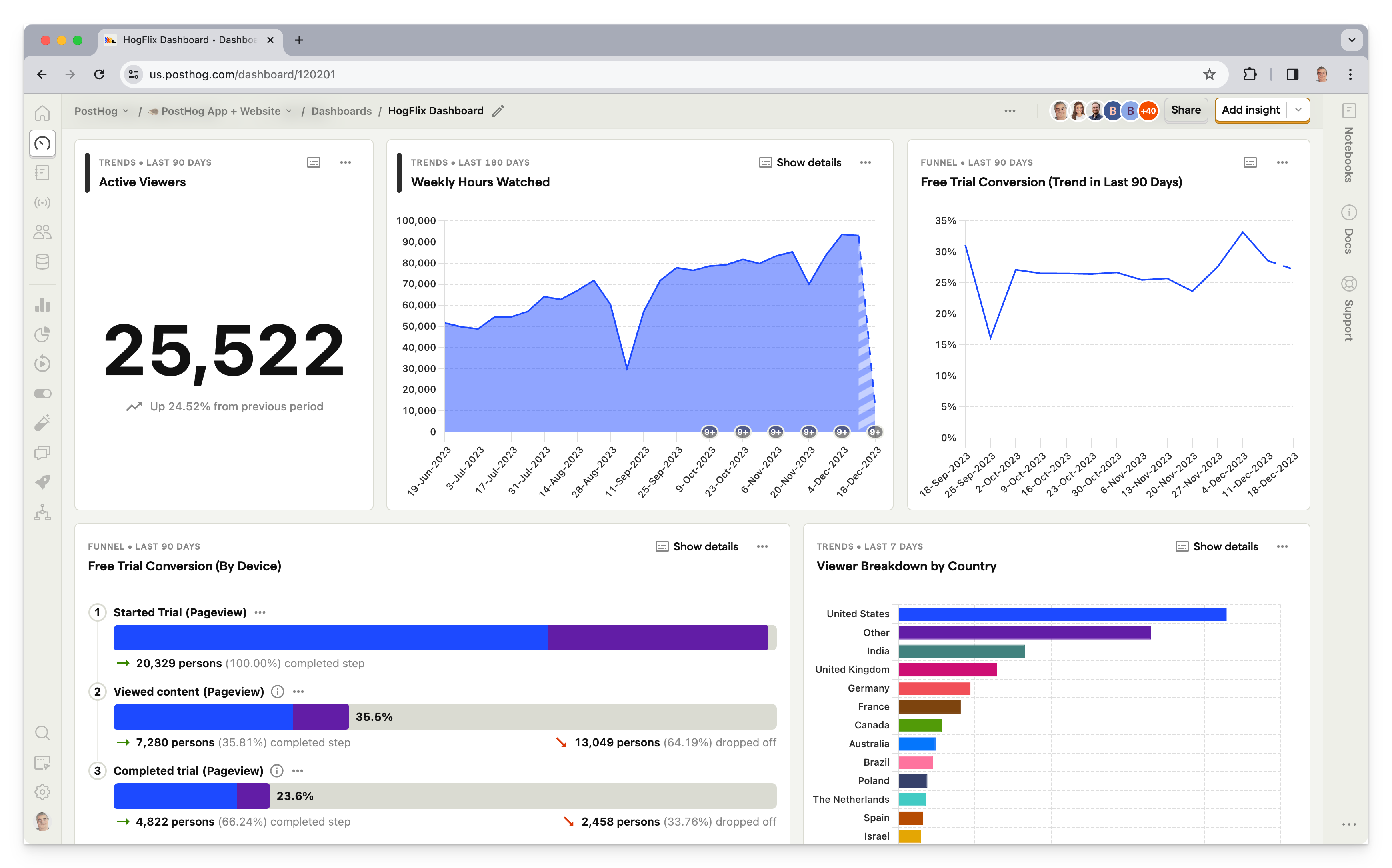
PostHog supports autocapture, so it replicates Heap's core behavior, and adds feature flags, A/B testing, surveys, error tracking, and a built-in data warehouse. It is open-source, offers SQL access, and its session replay includes console logs and network monitoring. Best for engineering-led product teams that want to consolidate several tools into one.
Amplitude: Depth Over Breadth
Amplitude unifies behavioral analytics, session replay, experimentation, and activation on a single data foundation. It is strong for teams that need consistent metrics and cohorts across departments, and its interface is accessible to non-technical stakeholders. Best for organizations where alignment on shared definitions matters more than raw collection flexibility.
FullStory: Session Replay First
FullStory leans toward digital experience intelligence — replay, frustration signals like rage clicks and dead clicks, and mobile app analytics. It is commonly used by customer success and support teams diagnosing user problems. Best when replay quality and UX debugging outrank analytics depth.
Countly: Privacy and Infrastructure Ownership
Countly takes an intent-based, privacy-first approach with self-hosted or private-cloud deployment. Teams own the infrastructure, choose data residency, and define events before capture. Best for regulated industries or teams treating product data as sensitive.
Data4: Simplicity for Website Analytics
Not every team leaving Heap needs another product analytics platform. If your core questions are about traffic sources, visitor behavior, and campaign performance rather than in-product event funnels, a focused website analytics platform may fit better. Data4 is built around real-time traffic tracking, audience segmentation, conversion analysis, and customizable dashboards, with multi-language support for international teams. It is a practical option when you want actionable website insights without the overhead of a full product analytics stack.
How to Evaluate Any Heap Competitor

Heap Alternative: How to Choose the Right Analytics Tool - How to Evaluate Any Heap Competitor.
Run every candidate through the same five questions:
- What is the tracking model? Autocapture, intent-based, or both. This determines your setup effort and your governance burden.
- What does it replace? If you are paying for separate replay, testing, and analytics tools, consolidation changes the total cost.
- Who owns the data? Cloud-only, self-hosted, or private cloud. Check data residency options if you operate across regions.
- Can power users query directly? SQL access matters for analysts; visual editors matter for everyone else.
- How does pricing scale? Look at event volume, session limits, and which features require a sales call.
For a broader side-by-side on setup, tracking model, reporting depth, and privacy, see this Data4 vs Heap vs Google Analytics comparison.
Matching the Tool to Your Team
| Your situation | Likely best fit |
|---|---|
| Engineering-led team consolidating tools | PostHog |
| Cross-functional teams needing shared metrics | Amplitude |
| Support and UX teams focused on replay | FullStory |
| Regulated industry needing data ownership | Countly |
| Website owners tracking traffic and campaigns | Data4 |
| Budget-conscious team wanting transparent pricing | Compare free tiers first |
A useful exercise: list the three questions your team asks most often about users. If they are about in-product behavior and funnels, prioritize product analytics depth. If they are about traffic, sources, and conversions, a simpler website analytics tool will get you there faster. Teams working through conversion questions specifically should start with a structured funnel analysis guide before choosing a platform.
Migration Considerations
Switching analytics tools is rarely a clean cut. Practical steps that reduce risk:
- Run both tools in parallel for two to four weeks. Compare key metrics before you trust the new numbers.
- Document your event taxonomy. Whether you move to autocapture or intent-based tracking, a written schema prevents the same naming chaos later.
- Check historical data export. Ask whether you can export raw events from Heap and import them, or whether you will start fresh.
- Audit your integrations. Slack alerts, warehouse syncs, and CRM connections all need re-pointing.
Related reading
- Data4 vs Pirsch vs Amplitude: Which Analytics Tool Fits? - Compare Data4, Pirsch, and Amplitude on setup, privacy, real-time tracking, product analytics depth, and pricing to pick the right tool for your site.
- Highly Configurable Hit Counter: Setup, Options & Best Tools - Learn what makes a hit counter highly configurable, compare display and tracking options, and choose the right setup for your site in 2026.
- Data4 vs Statcounter vs KISSmetrics: 2026 Analytics Comparison - Compare Data4, Statcounter, and KISSmetrics on setup, real-time tracking, reporting depth, and pricing to choose the right website analytics tool.
Sources and further reading
- Top Heap Alternatives and Competitors in 2026 [Pros & Cons] - Compare the top Heap alternatives for behavioral analytics, session replay, experimentation, and activation. Find the right platform for your team.
- The best Heap alternatives & competitors, compared - Compare the best Heap alternatives for product analytics – including PostHog, Amplitude, Mixpanel, FullStory, and more.
- Top Heap Alternative for Product Analytics & Privacy | Countly - Replace Heap with a privacy-focused analytics platform. Countly combines product analytics, user insights, and engagement tools with full data control.
FAQ
What is the best Heap alternative overall?
There is no single winner. PostHog is the closest like-for-like replacement because it also supports autocapture. Amplitude suits teams needing shared metrics across departments, FullStory suits replay-heavy workflows, and Countly suits privacy-driven organizations. For website-focused analytics, Data4 is a simpler option.
Is PostHog a good replacement for Heap?
Yes, if you want autocapture plus capabilities Heap lacks natively — feature flags, A/B testing, surveys, error tracking, and SQL access. It is open-source, which also reduces vendor lock-in.
Which Heap alternatives work best for non-technical teams?
Platforms with self-serve interfaces and visual event editors. Amplitude and FullStory are both designed to be accessible to product managers, marketers, and support staff without depending on data teams.
How do Heap alternatives handle privacy differently?
It depends on the tracking model. Autocapture tools ingest broadly and structure later, which complicates data minimization. Intent-based tools like Countly require events to be defined before collection, which aligns better with audit and compliance requirements.
Can one tool replace Heap and my other analytics tools?
Sometimes. PostHog and Amplitude both aim to consolidate analytics with replay, testing, and activation. FullStory and Mixpanel typically operate as point solutions used alongside other tools.
Conclusion
The right Heap alternative depends less on feature lists and more on your tracking philosophy. If you value autocapture and want to consolidate your stack, PostHog is the natural starting point. If you need shared metrics across teams, look at Amplitude. If replay drives your work, FullStory. If governance and data ownership are non-negotiable, Countly.
And if your questions are fundamentally about website traffic, sources, and conversions rather than in-product events, a focused platform like Data4 may serve you better than any product analytics suite. Start by naming the three questions you ask most often — then pick the tool that answers them fastest.